
- The Pets We're Comparing
- Hamsters
- The Good
- The Not-So-Good
- Best For
- Guinea Pigs
- The Good
- The Not-So-Good
- Best For
- Tortoises
- The Good
- The Not-So-Good
- Best For
- Fish (Freshwater)
- The Good
- The Not-So-Good
- Best For
- Hermit Crabs
- The Good
- The Not-So-Good
- Best For
- Praying Mantis
- The Good
- The Not-So-Good
- Best For
- Questions to Ask Before Getting Any Pet
- Who is actually going to take care of this animal?
- Can we afford the vet?
- What happens during vacation?
- Is our home set up for this?
- How will my child handle the pet dying?
- Why does my child want a pet?
- It's Okay to Say "Not Yet"
- My Recommendation by Age
- Final Thoughts
Your kid has been asking for a pet. Maybe it started with a friend’s hamster, or a YouTube video about tortoises, or just the general “I want a pet!” that every parent hears eventually. And now you’re here, probably late at night, trying to figure out what you’re actually getting into.
I get it. I’ve been through this research phase myself, and I’ve talked to hundreds of pet owners through this site. Here’s the thing most pet guides won’t tell you: there’s no perfect starter pet. Every animal comes with trade-offs. What matters is picking the right trade-offs for your family.
Let’s walk through the most common first pets honestly — the good, the bad, and the stuff nobody mentions until you’re already committed.
The Pets We’re Comparing
I’m focusing on small pets that families actually consider as first pets. Dogs and cats are a whole different conversation. These are the animals that typically live in a cage, tank, or enclosure in your kid’s room or the living room.
| Pet | Lifespan | Daily Time | First Year Cost | Best Age |
|---|---|---|---|---|
| Hamster | 2-3 years | 20-30 min | $300-$600 | 8+ |
| Guinea Pig | 5-7 years | 30-60 min | $500-$900 | 6+ |
| Tortoise | 50-100+ years | 20-30 min | $500-$1,200 | 10+ |
| Fish (freshwater) | 3-10 years | 10-15 min | $150-$400 | 6+ |
| Hermit Crab | 10-30 years | 10-15 min | $150-$350 | 8+ |
| Praying Mantis | 6-12 months | 10 min | $50-$150 | 8+ |
Now let’s dig into each one.
Hamsters
The Good
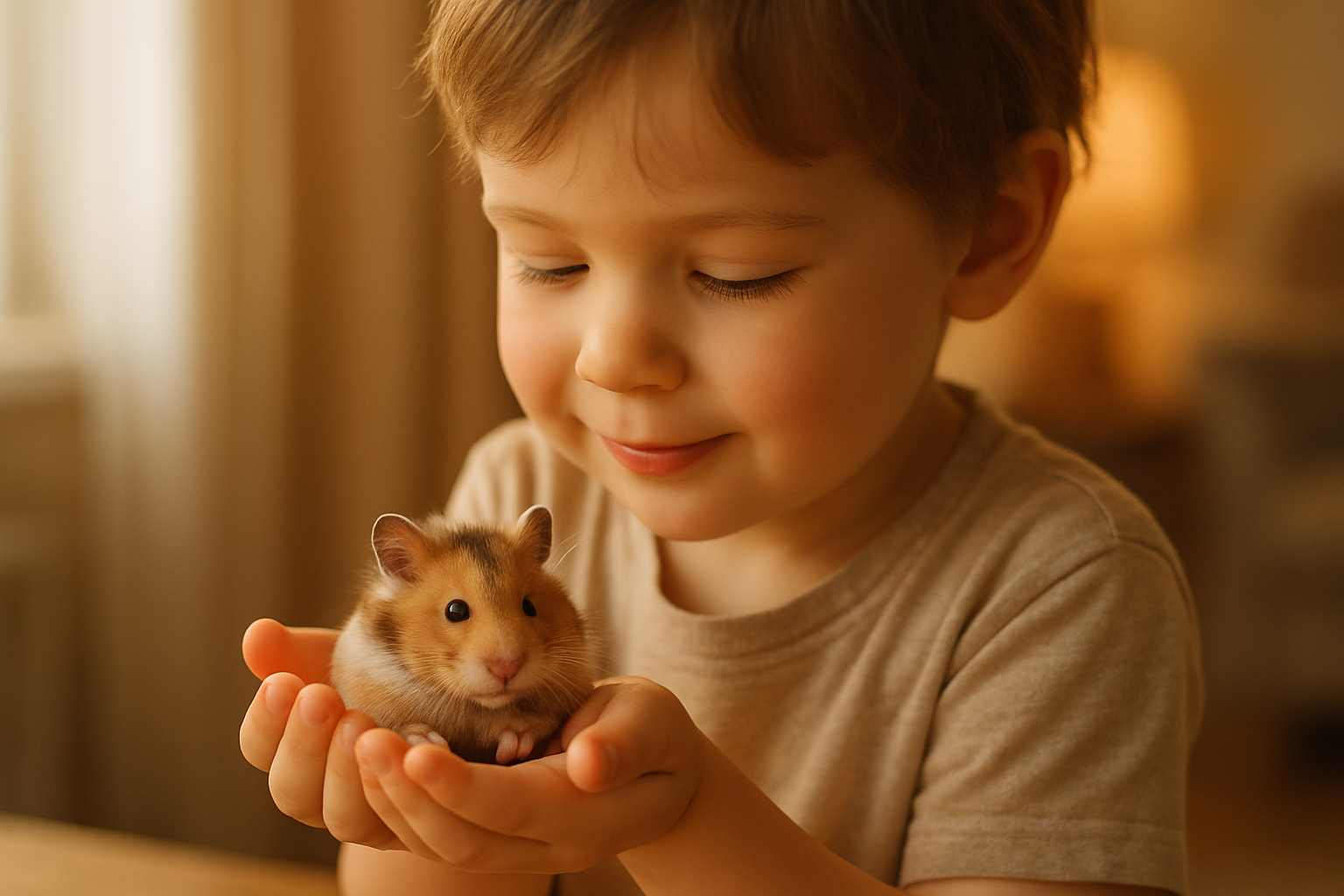
Hamsters are cute, entertaining to watch, and don’t take up a ton of space. They’re solitary animals, so you only need one (in fact, most species must be kept alone). Once tamed, many hamsters enjoy being handled, and watching them stuff their cheeks with food is endlessly amusing.
They’re also relatively affordable compared to guinea pigs or tortoises, and their care routine is manageable for most families.
The Not-So-Good
Hamsters are nocturnal. Your kid will want to play at 3 PM; the hamster wants to sleep. Waking them up regularly causes stress and can make them nippy. This is the number one reason hamsters get labeled “mean” — it’s not the hamster’s fault, it’s a scheduling mismatch.
They also need more space than pet stores suggest. A proper hamster cage should be at least 775 square inches of unbroken floor space. Those colorful tube cages you see at PetSmart? Too small. A good cage setup runs $100-$200, not the $30 starter kit on the shelf.
Hamster lifespans of 2-3 years mean your child will likely experience pet loss relatively soon. For some families that’s manageable; for others it’s heartbreaking. Be honest with yourself about how your kid handles grief.
If you’re leaning toward a hamster, check out our guide to hamster lifespans by breed to set realistic expectations.
Best For
Families with kids 8+ who understand the hamster’s nocturnal schedule, and parents willing to supervise handling until the child builds confidence. Works well for smaller homes and apartments.
Guinea Pigs
The Good
Guinea pigs are probably the most kid-friendly small pet out there. They’re active during the day (huge plus over hamsters), they rarely bite, and they’re vocal — they’ll wheek and purr and squeal when they hear the fridge door open. Kids absolutely love that interaction.
They’re also bigger than hamsters, which makes them easier for small hands to hold safely. And their longer lifespan of 5-7 years means they can be a real companion through your child’s elementary school years.
The Not-So-Good
Guinea pigs need a friend. They’re social animals, and keeping one alone is considered poor welfare in many countries (it’s actually illegal in Switzerland). So you’re committing to at least two, which doubles your food and bedding costs.
They need a LOT of space — at minimum 7.5 square feet for a pair, but 10+ is better. That’s a big footprint in a kid’s bedroom.
And let’s talk about smell. Guinea pigs produce a lot of waste. You’ll be doing partial cage cleanings every 2-3 days and a full clean weekly. If you skip it, the smell gets noticeable fast. Bedding costs add up — expect $30-$50 per month for a pair.
They also need daily vitamin C (they can’t produce their own, just like humans), fresh vegetables every day, and unlimited timothy hay. The ongoing costs are higher than most people expect.
Best For
Families with kids 6+ who have space for a large enclosure, are okay with the ongoing cost of two animals, and want a pet their child can interact with during normal waking hours.
Tortoises
The Good
Tortoises are fascinating, low-energy pets with incredible lifespans. They have genuine personality — they’ll come to you for food, they explore their enclosure, and many enjoy having their shell scratched. There’s something calming about watching a tortoise methodically work through a pile of greens.
They don’t smell much (compared to rodents), they don’t make noise, and they don’t need daily handling to stay tame. For families who want a pet to observe and care for rather than cuddle, tortoises can be wonderful.
The Not-So-Good
I need to be blunt here: a tortoise will probably outlive you. A Russian tortoise lives 50+ years. A sulcata can live over 100. This isn’t a childhood pet — it’s a lifetime commitment that may need to be written into your will.
The setup costs are significant. They need proper UVB lighting (not just any bulb), a heat gradient, the right substrate, and an enclosure that grows with them. Some species (like sulcatas) start small and end up over 100 pounds, needing an outdoor enclosure the size of a backyard.
Vet care is expensive because tortoises need an exotic animal veterinarian. A basic checkup can run $100-$200, and treatment for illness can hit $500+ easily. Check out our article on why tortoises stop eating — health issues with reptiles can be subtle and costly.
Also, pet store advice for tortoises is frequently wrong. Wrong diet, wrong enclosure size, wrong lighting. Do your own research before buying anything at the store.
Best For
Families with kids 10+ who understand this is a decades-long commitment. Best when a parent is genuinely interested too, because this pet will still be around long after your child moves out. Read our guide to beginner tortoise species before choosing one.
Fish (Freshwater)
The Good
Fish tanks are beautiful, calming, and educational. Setting up and maintaining an aquarium teaches kids about water chemistry, ecosystems, and responsibility. A well-planted tank becomes a genuine hobby that can last years.
Daily time commitment is low — just feeding (which takes a minute) and checking that everything looks normal. Fish don’t need handling, walking, or socialization. They’re great for kids who want to observe rather than hold their pet.
The Not-So-Good
The “easy starter fish” thing is mostly a myth. Goldfish produce massive amounts of waste and need 20+ gallon tanks — not the bowl from the movies. Betta fish need heated, filtered tanks of at least 5 gallons, not those tiny cups they’re sold in.
The initial setup for a proper aquarium (tank, filter, heater, light, substrate, water conditioner, test kit) runs $150-$300 for a 20-gallon setup. Then there’s cycling the tank before adding fish, which takes 4-6 weeks. Kids’ patience gets tested.
Fish also die. Sometimes despite doing everything right. Ammonia spikes, disease outbreaks, and mysterious deaths are part of the hobby, especially early on. If your child gets attached to individual fish, this can be tough.
There’s also no cuddling. For some kids, a pet they can only watch but never touch gets old after a few weeks.
Best For
Families with kids 6+ who enjoy observing nature. Works well when a parent is also interested in the hobby, since tank maintenance requires adult-level responsibility. Great for kids who are gentle observers more than hands-on handlers.
Hermit Crabs
The Good
Hermit crabs are quirky, surprisingly social, and fun to watch — especially when they switch shells. They’re pretty quiet, don’t smell much with proper care, and their enclosure can be set up to look like a mini tropical environment. Kids love decorating the tank with shells and climbing toys.
They’re also relatively inexpensive to feed (fresh fruits, vegetables, and commercial food), and their daily care routine is minimal.
The Not-So-Good
Almost everything sold as “hermit crab supplies” at pet stores and boardwalk shops is wrong. Painted shells are toxic. Wire cages don’t hold humidity. Those little sponges in the water dish breed bacteria.
Hermit crabs need specific humidity (70-80%) and temperature (75-85°F), which means a glass tank with a lid, an under-tank heater, and regular misting. They also need both fresh and saltwater pools deep enough to submerge in.
Here’s the biggest surprise: hermit crabs can live 10-30 years in proper care. Most die within months because of terrible husbandry, not because they’re “short-lived” pets. If you set up correctly, you’re signing on for a long commitment.
They’re also not great for handling. They pinch, they’re stressed by being held, and they’re most active at night. They’re observation pets, not cuddly ones.
Best For
Families with kids 8+ who think crabs are cool and are okay with an observation pet. Parents need to commit to proper humidity and temperature, since kids won’t monitor this consistently.
Praying Mantis
The Good
Mantids are absolutely fascinating to watch. They hunt live prey, they have alien-like movements, and some species look like they belong in a sci-fi movie. For kids interested in bugs and nature, a mantis can spark a genuine love of entomology.
They’re the cheapest pet on this list — a simple enclosure, some fruit flies or small crickets, and a misting bottle is really all you need. Space requirements are tiny. And because they only live 6-12 months, it’s a defined commitment — a good “trial run” for pet ownership.
We’ve got a full beginner’s guide to mantis keeping if this sounds interesting.
The Not-So-Good
You have to feed them live insects. That means keeping fruit fly cultures or buying crickets regularly. Some parents are fine with this; others find it gross. Your kid needs to be okay with watching their pet eat another bug alive.
Mantids don’t bond with you. They can be handled, but they’re not affectionate — they’re wild animals being kept in a box. The short lifespan also means your child will experience their pet’s death relatively quickly.
They’re also fragile. A fall during handling, a missed feeding, or wrong humidity can be fatal. They require gentle hands and attention to detail.
Best For
Kids 8+ who think bugs are cool (not scary), and families who want a short-term, low-cost way to test whether their child is ready for pet responsibility. Not for kids who want something cuddly.
Questions to Ask Before Getting Any Pet
Before you pick a species, sit down as a family and honestly answer these questions:
Who is actually going to take care of this animal?
Be real. Your 7-year-old might promise to do everything, but when the excitement fades in two weeks, who’s cleaning the cage? If the answer is “probably me,” make sure you want this pet too.
Can we afford the vet?
Every pet can get sick. Hamsters get wet tail. Tortoises get respiratory infections. Fish get ich. An emergency vet visit for a small animal runs $100-$300+, and exotic vet care (tortoises, hermit crabs) costs even more. If vet care would be a financial strain, that’s important to consider.
What happens during vacation?
Fish need feeding. Hamsters need water. Tortoises need their lights on a timer and someone checking on them. You’ll need a pet sitter or a reliable neighbor. Factor this into your plan.
Is our home set up for this?
A guinea pig cage takes up real space. A tortoise enclosure even more. Fish tanks are heavy (a 20-gallon tank weighs about 225 lbs full). Make sure you have room that isn’t “we’ll figure it out later.”
How will my child handle the pet dying?
It’s an uncomfortable question, but it matters. Hamsters live 2-3 years. Mantids under a year. This will likely be your child’s first experience with death. Some kids handle it okay; others are devastated. Think about your child’s temperament.
Why does my child want a pet?
Is it because their friend has one? Because they saw something cute on TikTok? Or do they genuinely want to care for an animal? The motivation matters, because novelty wears off but the responsibility doesn’t.
It’s Okay to Say “Not Yet”
I want to say something that most pet websites won’t: deciding not to get a pet is a responsible decision.
If your family isn’t ready — financially, logistically, or emotionally — waiting is the right call. An animal shouldn’t suffer because the timing was wrong. There’s no shame in telling your kid, “We’re not ready right now, but let’s plan for it.”
You could start smaller. Visit a friend’s pet. Volunteer at an animal shelter. Watch documentaries about the animal your kid is interested in. Read care guides together. If the interest holds up after a few months of learning, that’s a good sign your child is ready.
Getting a pet should be a thoughtful family decision, not an impulse buy on a Saturday afternoon at the pet store.
My Recommendation by Age
| Child’s Age | Best Options | Why |
|---|---|---|
| Under 6 | Fish (parent-managed) | Low-risk observation pet. Parent does the real work. |
| 6-8 | Guinea pigs, fish | Daytime activity, harder to hurt accidentally, interactive. |
| 8-10 | Hamster, hermit crabs, mantis | Old enough to handle gently, can help with daily care. |
| 10+ | Any on this list (with parent involvement) | Can take on real responsibility. Tortoises become an option. |
Remember: every age recommendation assumes a parent is involved. No child should be solely responsible for an animal’s welfare. Even teenagers need backup.
Final Thoughts
The best first pet isn’t the cheapest one, or the cutest one, or the one your kid’s friend has. It’s the one that fits your family’s lifestyle, budget, and commitment level. Take your time with this decision. Read the care guides. Budget the real costs. Talk to people who own these animals.
And if you do decide to bring an animal home, commit to doing it right. A proper enclosure, good food, and veterinary care when needed. These animals are living creatures that depend entirely on you. That’s a privilege worth taking seriously.
Whatever you decide, the fact that you’re researching this at all tells me your kid’s future pet is going to be well cared for.
If you think your pet is ill, call a vet immediately. All health-related questions should be referred to your veterinarian. They can examine your pet, understand its health history, and make well informed recommendations for your pet.
903pets.com Staff
