
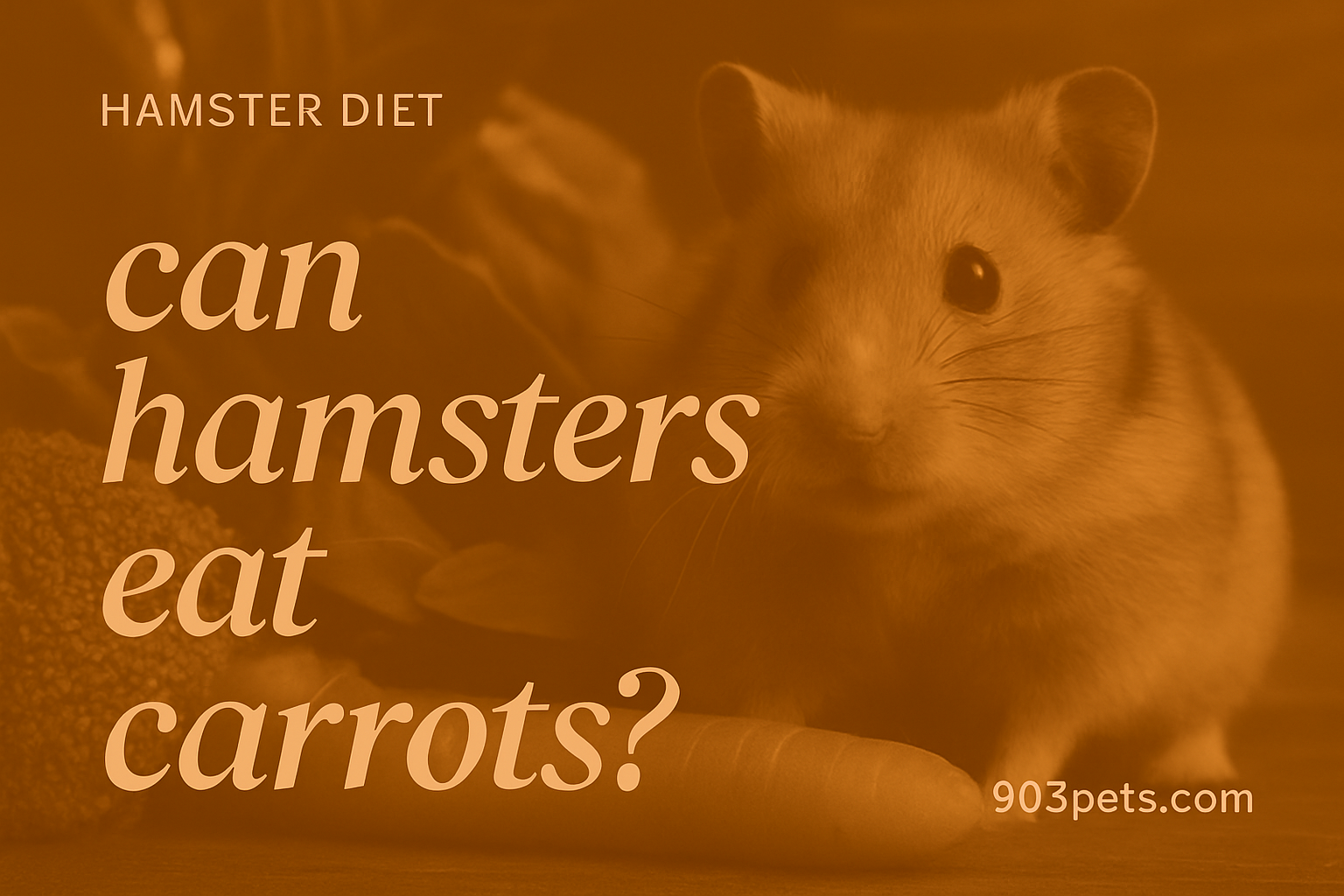
Carrots are one of the safest and easiest vegetables to feed your hamster. Unlike some foods where you have to worry about toxicity or sugar overload, carrots are pretty straightforward. That said, there are still a few things worth knowing to get it right.
How much carrot to feed your hamster
| Hamster type | Portion size | Frequency |
|---|---|---|
| Syrian | 1/2 inch cube or thin slice | 2-3 times per week |
| Dwarf (Roborovski, Winter White) | 1/4 inch cube | 2-3 times per week |
| Campbell’s Dwarf | 1/4 inch cube | 2 times per week |
Carrots do contain natural sugar (about 4.7 grams per 100g), which is lower than most fruits but still something to keep in mind for dwarf breeds prone to diabetes. It’s not a high-sugar food by any means, but it’s not a zero-sugar food either.
Raw vs cooked carrots
Both work. Here’s the difference:
- Raw carrots: Better for dental health because the crunchy texture helps wear down their constantly growing teeth. Most hamsters prefer the crunch. This is my go-to option.
- Cooked carrots: Softer, easier for elderly hamsters or those with dental problems to eat. Boil or steam only. No butter, oil, salt, or seasoning. Let it cool completely before serving.
- Baby carrots: Fine to use. Just cut them to appropriate size. Be aware that some baby carrots are washed in a chlorine solution, so rinse them well.
- Carrot tops (the leafy greens): Also safe. Some hamsters love them, others ignore them. They’re nutritious and lower in sugar than the root.
I usually keep a bag of regular carrots around and just slice off a small piece when it’s veggie day. Simple and cheap.
How to prepare carrots for your hamster
- Wash the carrot thoroughly under running water.
- Cut a small piece (thumbnail sized for Syrians, half that for dwarfs).
- Peeling is optional. The skin is safe, but peeling removes any residual pesticide if you’re not buying organic.
- Place it in their food bowl or hand-feed it.
- Remove any uneaten carrot after 24 hours. Raw carrot lasts longer than fruit before going bad, but it still dries out and can get moldy in humid cage conditions.
Complete safe vegetable list for hamsters
Carrots are just one option. Here’s a full list of vegetables your hamster can eat. Vegetables should make up a small portion of the overall diet, with the bulk being a good pellet and seed mix. For a full diet breakdown, check out our guide on what hamsters eat.
| Vegetable | Safe? | Portion | Notes |
|---|---|---|---|
| Carrot | Yes | Thumbnail piece, 2-3x/week | Raw or cooked, good for teeth |
| Broccoli | Yes | Small floret, 2x/week | Can cause gas if overfed |
| Cucumber | Yes | Thin slice, 2-3x/week | Mostly water, good for hydration |
| Bell pepper | Yes | Small piece, 2-3x/week | All colors safe. High in vitamin C. Remove seeds. |
| Zucchini | Yes | Thin slice, 2-3x/week | Mild flavor, most hamsters accept it |
| Sweet potato (cooked) | Yes | Small cube, 1-2x/week | Must be cooked. Raw sweet potato is too hard. |
| Peas | Yes | 2-3 peas, 2x/week | Fresh or thawed frozen. Not canned. |
| Corn | Yes (limited) | A few kernels, 1x/week | High in starch. Fresh or thawed frozen only. |
| Cauliflower | Yes | Small floret, 1-2x/week | Can cause gas like broccoli |
| Spinach | Yes (limited) | 1 small leaf, 1x/week | High oxalates bind calcium. Don’t overdo it. |
| Kale | Yes (limited) | Small piece, 1x/week | Same oxalate concern as spinach |
| Green beans | Yes | 1/2 inch piece, 2x/week | Raw or lightly steamed |
| Celery | Yes (with prep) | Small piece, 1-2x/week | Cut into tiny pieces to avoid stringy fibers getting caught in cheek pouches |
| Asparagus | Yes | Small piece of tip, 1x/week | Raw or lightly steamed. Strong smell in urine. |
| Romaine lettuce | Yes | Small piece, 2-3x/week | Better than iceberg. Still mostly water. |
| Dandelion greens | Yes | Small leaf, 2-3x/week | Only from pesticide-free areas |
Vegetables to avoid
Not everything from the produce aisle is safe:
- Onions and garlic. Toxic to hamsters. Can cause hemolytic anemia (destruction of red blood cells). Never feed any member of the allium family, including leeks, chives, and shallots.
- Raw potatoes. Contain solanine, which is toxic. Cooked potato in tiny amounts is technically safe but nutritionally pointless.
- Tomato leaves and stems. The fruit itself is okay in tiny amounts, but the green parts of the tomato plant are toxic.
- Rhubarb. Toxic. The leaves are the worst part, but avoid the whole plant.
- Iceberg lettuce. Not toxic, but it’s basically water with zero nutritional value and can cause diarrhea. Use romaine instead.
- Hot peppers. Capsaicin irritates their digestive system. Stick to sweet bell peppers.
- Raw beans (kidney, lima, etc.). Contain lectins that are toxic when raw. Just avoid beans entirely except green beans.
Common mistakes with feeding vegetables
- Introducing too many new foods at once. Give one new vegetable at a time, wait 48 hours, and watch for diarrhea or soft stool before trying another. This way you know exactly what caused any reaction.
- Not washing produce. Pesticide residue is a real concern for an animal this small. Wash everything, even organic produce.
- Feeding canned vegetables. Canned veggies have added salt and preservatives. Always use fresh or plain frozen (thawed).
- Replacing pellets with vegetables. Vegetables are a supplement, not the main diet. The bulk of nutrition comes from a good hamster pellet or seed mix. Veggies are about 10% of total food intake.
- Forgetting about hoarding. Hamsters stash food. That cucumber slice you gave them on Monday might be rotting in their bedding nest by Thursday. Check hiding spots regularly.
What I wish I knew about hamster vegetables
When I first got hamsters, I thought more veggies meant healthier hamsters. Turns out, too many fresh foods causes digestive problems, especially loose stool. The right amount is a small piece of veggie 3-4 times per week, rotating between different types.
I’ve also learned that individual hamsters have strong food preferences. One of my Syrians would eat any vegetable put in front of her. Another would only touch carrots and cucumber and ignored everything else. Don’t stress if your hamster is picky. As long as they’re eating their base diet of pellets and seed mix, being choosy about veggies isn’t a health concern.
Getting the right base diet matters more than any treat or supplement. A quality food mix gives your hamster consistent nutrition every day: find hamster food options here.
For exact quantities on how much to feed daily (base diet plus treats), our guide on how much food and water hamsters need has the specific numbers.
And if your hamster acts weird around food (guarding, pouching everything immediately, getting aggressive at feeding time), that’s normal hamster behavior, but it helps to understand why. Our hamster behavior guide explains the instincts behind these habits.
A simple weekly veggie schedule
If you want a no-fuss routine, here’s what I do:
| Day | Vegetable |
|---|---|
| Monday | Carrot slice |
| Wednesday | Small broccoli floret or cucumber slice |
| Friday | Bell pepper piece or a pea or two |
| Sunday (optional) | Small piece of fruit as a treat |
That’s it. Simple, varied, and easy to stick with. Your hamster gets nutritional variety without you having to think about it too much.
If you think your pet is ill, call a vet immediately. All health-related questions should be referred to your veterinarian. They can examine your pet, understand its health history, and make well informed recommendations for your pet.
903pets.com Staff
![Do hamsters like to be petted and held? [Answers]](https://903pets.com/wp-content/uploads/2021/05/How-to-Pet-a-Hamster-Happy-vs.-Unhappy-Signs.jpg "How to Pet a Hamster: 9 Happy vs. Unhappy Signs 5")
