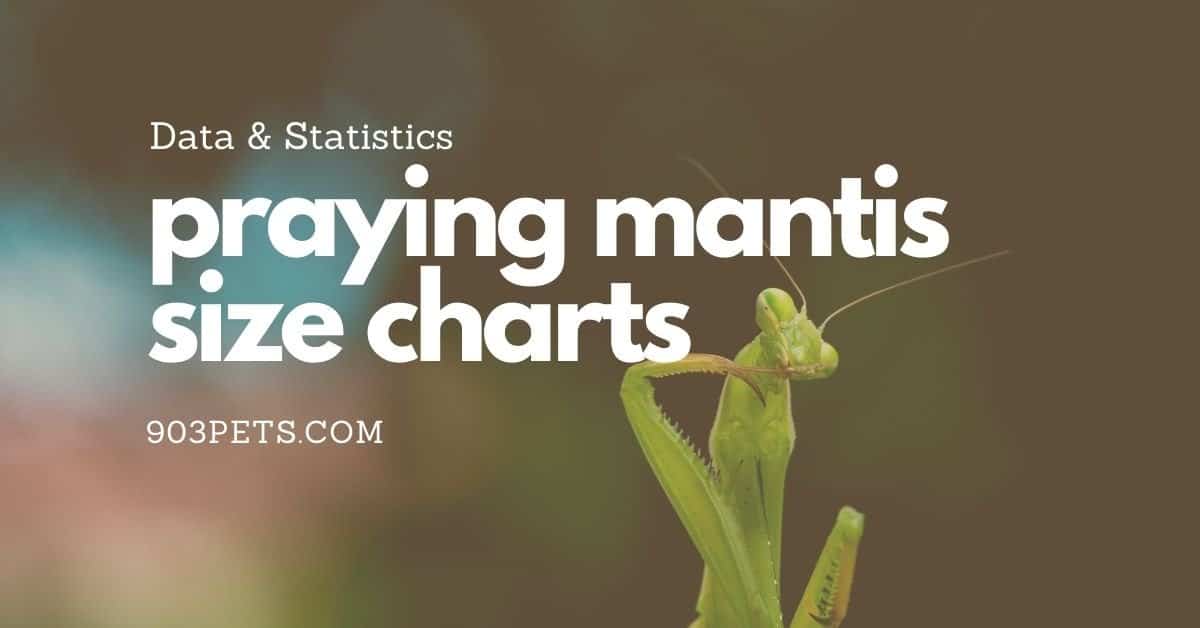
Praying mantises come in a staggering range of sizes, from tiny species barely an inch long to impressive giants that stretch past six inches. Whether you are choosing your first pet mantis or building an enclosure for a species you already own, knowing exactly how big your mantis will get – and how fast – is essential for proper care.
Praying Mantis Size by Species
Below is a comprehensive size chart covering the most popular pet mantis species and several commonly encountered wild species. Adult sizes are measured from head to abdomen tip, not including the raptorial forelegs.
| Species | Common Name | Adult Female Size | Adult Male Size | Difficulty |
|---|---|---|---|---|
| Tenodera sinensis | Chinese Mantis | 4–5 inches (10–13cm) | 3.5–4.5 inches | Beginner |
| Stagmomantis carolina | Carolina Mantis | 2.5–3 inches (6–7.5cm) | 2–2.5 inches | Beginner |
| Sphodromantis viridis | Giant African Mantis | 3–4 inches (7.5–10cm) | 2.5–3.5 inches | Beginner |
| Hierodula membranacea | Giant Asian Mantis | 3.5–4.5 inches (9–11cm) | 3–3.5 inches | Beginner |
| Phyllocrania paradoxa | Ghost Mantis | 2–2.5 inches (5–6cm) | 1.5–2 inches | Beginner |
| Hymenopus coronatus | Orchid Mantis | 2.5–3 inches (6–7.5cm) | 1–1.5 inches | Intermediate |
| Idolomantis diabolica | Devil’s Flower Mantis | 4–5 inches (10–13cm) | 3.5–4 inches | Advanced |
| Deroplatys desiccata | Dead Leaf Mantis | 3–3.5 inches (7.5–9cm) | 2.5–3 inches | Intermediate |
| Mantis religiosa | European Mantis | 2.5–3 inches (6–7.5cm) | 2–2.5 inches | Beginner |
| Creobroter meleagris | Flower Mantis (Indian) | 1.5–2 inches (4–5cm) | 1–1.5 inches | Intermediate |
| Rhombodera basalis | Giant Shield Mantis | 4–5 inches (10–13cm) | 3–4 inches | Intermediate |
| Parasphendale affinis | Budwing Mantis | 2.5–3 inches (6–7.5cm) | 2–2.5 inches | Beginner |
Notice that females are almost always larger than males. This sexual dimorphism can be dramatic – in orchid mantises, females are nearly twice the size of males. Keep this in mind when planning enclosures.
Growth Stages: From Nymph to Adult
Praying mantises go through incomplete metamorphosis, meaning they hatch as miniature versions of adults and grow through a series of molts called instars. Most species go through 6 to 9 instars before reaching adulthood.
Typical Growth Timeline
| Instar | Approximate Size | Time Between Molts | Notes |
|---|---|---|---|
| L1 (Hatchling) | 0.25–0.5 inches | – | Very fragile, eat fruit flies only |
| L2 | 0.5–0.75 inches | 7–14 days | Still eating fruit flies |
| L3 | 0.75–1 inch | 10–14 days | Can start small crickets |
| L4 | 1–1.5 inches | 14–21 days | Growing noticeably between molts |
| L5 | 1.5–2 inches | 14–21 days | Gender differences becoming visible |
| L6 | 2–2.5 inches | 21–28 days | Can eat medium prey items |
| L7-L8 | 2.5–3.5 inches | 21–35 days | Sub-adult, wing buds visible |
| Adult | Species dependent | Final molt | Wings fully developed, ready to breed |
The total time from hatchling to adult is typically 3 to 6 months for most common pet species. Temperature plays a big role – warmer temperatures (78–85°F) speed up metabolism and growth, while cooler temps slow things down.
Enclosure Size Guidelines
The classic rule for mantis enclosures is: the cage should be at least 3 times as tall as the mantis is long, and at least 2 times as wide. Height matters more than floor space because mantises are arboreal and need room to hang upside down when molting.
| Mantis Adult Size | Minimum Enclosure Size | Recommended Enclosure |
|---|---|---|
| 1–2 inches | 32 oz deli cup | Small cube enclosure (4×4×6 inches) |
| 2–3 inches | 6×6×9 inch container | Medium mesh or acrylic enclosure |
| 3–4 inches | 8×8×12 inch | Large cube terrarium |
| 4–5+ inches | 12×12×18 inch | Full terrarium or mesh cage |
For nymphs, do not put them in a huge enclosure right away. They will have trouble finding their food. Start with a small deli cup and upgrade as they grow. A good progression is: 16oz cup for L1-L3, 32oz cup for L3-L5, then a proper enclosure for L5 and up.
A popular choice among mantis keepers is the mesh pop-up cage for larger species, or acrylic insect enclosures that provide good visibility and ventilation. For beginners on a budget, modified 32oz deli cups with mesh lids work perfectly for small to medium species.
How to Measure Your Mantis
Measuring a live mantis is tricky because they do not hold still. The most accurate method is to photograph your mantis next to a ruler and measure from the photo. Measure from the top of the head (between the eyes) to the tip of the abdomen. Do not include the legs or antennae.
Another method is to measure the enclosure wall when the mantis is resting flat against it. Most keepers estimate size rather than getting an exact measurement – you mainly need to know the approximate instar and whether you need a bigger enclosure.
Factors That Affect Growth Rate
Several things influence how fast your mantis grows and its ultimate adult size:
- Temperature: Higher temps (80–85°F) accelerate growth. Lower temps (68–72°F) slow it down. Keeping things too cool can cause failed molts.
- Feeding frequency: Well-fed mantises grow faster and molt sooner. Underfed mantises may take much longer between instars.
- Prey size: Offering appropriately sized prey (about one-third to one-half the mantis body length) ensures they eat enough. Prey too large can injure the mantis; prey too small wastes their energy chasing it.
- Humidity: Proper humidity is critical for successful molts. Most species need 50–70% humidity, with tropical species needing more. Failed molts from low humidity can permanently stunt growth.
- Genetics: Individual variation exists within species. Some individuals just grow larger than others.
Male vs. Female Size Differences
As mentioned, females are larger in virtually all mantis species. But there is more to it than just length. Females are also significantly bulkier and heavier, especially when gravid (carrying eggs). A female Chinese mantis can weigh 3 to 4 times as much as a male of the same species.
Males tend to be slimmer, more skittish, and have longer wings relative to body size. They also typically reach adulthood faster – sometimes a full month before females of the same clutch. This can be helpful to know if you are planning to breed, since you may need to slow down the male’s development by keeping him slightly cooler.
Choosing the Right Species for Your Space
If you are limited on space, smaller species like the ghost mantis or budwing mantis are excellent choices. They thrive in compact enclosures and are forgiving of beginner mistakes.
For keepers who want an impressive display animal, the Chinese mantis, giant shield mantis, or devil’s flower mantis are showstoppers – but they need correspondingly larger enclosures and more food.
A solid starter setup includes a small terrarium like the Exo Terra Nano Tall (8×8×12 inches) which works well for most medium species from sub-adult to adult.
Related Mantis Guides
For more on mantis care, read our complete beginner’s guide to praying mantis care, learn about setting up the perfect mantis habitat, and find out how long praying mantises live.
If you think your pet is ill, call a vet immediately. All health-related questions should be referred to your veterinarian. They can examine your pet, understand its health history, and make well informed recommendations for your pet.
903pets.com Staff