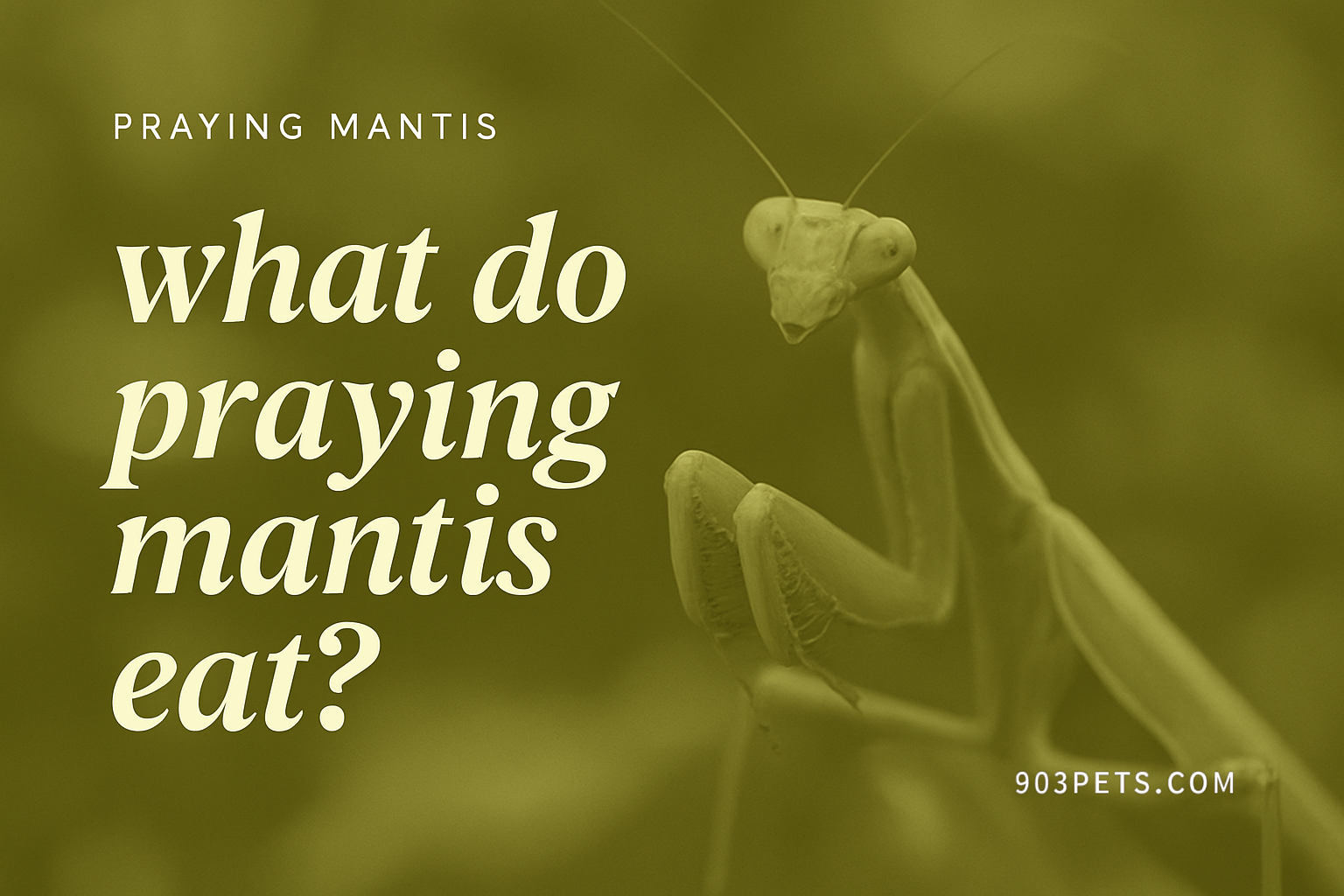
Feeding a pet mantis is one of the more interesting parts of keeping one. Unlike most pets, you get to watch actual hunting behavior right in your living room. But getting the food right matters more than people realize, especially for young nymphs that can starve quickly if given the wrong size prey.
- What mantises eat in the wild vs captivity
- Feeding by life stage
- L1-L3 nymphs (first few weeks)
- L4-L6 nymphs (juvenile stage)
- Sub-adult and adult mantises
- Gut-loading: why it matters
- How much and how often to feed
- Common feeding mistakes
- Where to buy feeder insects
- What I wish I knew about feeding mantises
What mantises eat in the wild vs captivity
Wild mantises are opportunistic predators. They eat whatever lands near them and fits in their raptorial forelegs. That includes flies, moths, crickets, grasshoppers, beetles, and occasionally small frogs, lizards, or even hummingbirds (though that last one is rare and mostly limited to large tropical species).
In captivity, the diet is simpler but still needs variety. Relying on a single feeder insect is a common mistake. I rotate between three or four different prey types to make sure my mantises get a range of nutrients. Think of it like eating nothing but chicken every day. You could survive, but you would not thrive.
Feeding by life stage
L1-L3 nymphs (first few weeks)
Brand new mantis nymphs are tiny, sometimes smaller than a grain of rice. They can only eat prey that is roughly one-third their body length or smaller. For most species, that means:
- Flightless fruit flies (Drosophila melanogaster) for L1-L2 nymphs
- Flightless fruit flies (Drosophila hydei) for L2-L3 nymphs (these are slightly larger)
Feed nymphs every day or every other day. Put 2-4 fruit flies in the enclosure and watch to make sure the nymph catches at least one. If the fruit flies are crawling all over the nymph and stressing it out, you have too many in there.
If you keep mantises regularly, making your own fruit fly cultures saves serious money compared to buying them every week.
L4-L6 nymphs (juvenile stage)
Once your mantis hits L4 or so, it can handle larger prey:
- House flies or blue bottle flies
- Small crickets (1/4 inch, also called pinheads)
- Small mealworms (use sparingly since the chitin is hard to digest)
Feed every 2-3 days at this stage. The mantis will start showing more active hunting behavior, which is honestly the fun part of keeping them.
Sub-adult and adult mantises
Adult mantises can eat a wide variety of prey. Good options include:
| Feeder insect | Size | Notes |
|---|---|---|
| Crickets | Medium to large | Most common feeder. Remove uneaten crickets since they can bite your mantis at night. |
| Blue bottle flies | Medium | Great choice. Clean, easy to handle when refrigerated. Mantises love catching them mid-air. |
| Dubia roaches | Small to medium | Nutritious, low odor, do not climb smooth surfaces. Better than crickets in many ways. |
| Moths | Varies | A natural prey item. Wax moths from pet stores work well. |
| Mealworms | Medium | Use occasionally. High in fat, hard chitin shell. Not a staple food. |
| Superworms | Large | Only for large species like Chinese or Giant Asian mantises. Can bite back. |
Feed adults every 2-4 days. A mantis with a swollen abdomen is well-fed. A mantis with a flat or concave abdomen is hungry. It is that simple.
Gut-loading: why it matters
Gut-loading means feeding nutritious food to your feeder insects 24-48 hours before offering them to your mantis. Whatever the cricket ate becomes nutrition for your mantis. If the cricket ate nothing but cardboard in a pet store bin, that is what your mantis gets.
Good gut-loading foods for crickets and roaches:
- Fresh vegetables (carrots, sweet potato, dark leafy greens)
- High-quality fish flakes
- Commercial gut-load products (available on Amazon)
This is one of those things that separates okay mantis keepers from good ones. It takes two minutes of effort and makes a real difference in your pet health and coloring.
How much and how often to feed
| Life stage | Prey size | Frequency | Amount per feeding |
|---|---|---|---|
| L1-L3 nymph | Fruit flies (D. melanogaster/hydei) | Daily to every other day | 2-4 flies |
| L4-L6 nymph | House flies, small crickets | Every 2-3 days | 1-2 insects |
| Sub-adult | Medium crickets, blue bottles | Every 2-3 days | 1-2 insects |
| Adult | Large crickets, roaches, moths | Every 3-4 days | 1-2 insects |
| Gravid female | Large prey | Every 1-2 days | 2-3 insects (they eat a lot before laying) |
Common feeding mistakes
Prey too large. If the feeder insect is bigger than half the mantis body length, it is too big. Large crickets can actually injure or kill a small mantis, especially during molting.
Leaving uneaten crickets in the enclosure. Crickets are opportunistic and will chew on a molting or sleeping mantis. Always remove uneaten prey after a few hours.
Only feeding one type of insect. Variety matters for nutrition. Rotate between at least 2-3 different feeders.
Feeding during pre-molt. Mantises stop eating for several days before molting. This is normal. Do not panic and do not leave prey in the enclosure during this time. A mantis hanging upside down with a swollen thorax is about to molt, not sick.
Not providing water. Mantises drink water droplets. Lightly mist one side of the enclosure every day or two. Do not soak the enclosure since too much humidity causes mold, but too little causes dehydration and failed molts.
Where to buy feeder insects
Local pet stores carry crickets and sometimes mealworms, but for variety you will probably need to order online. Amazon carries several options, and specialty reptile/invert suppliers like Josh’s Frogs and Rainbow Mealworms ship live feeders with heat packs in winter.
For fruit flies specifically, buying a starter culture and maintaining your own supply is far cheaper than buying new cups every week. I go through about one culture per two weeks with a few mantises. Here is our guide to making your own cultures.
What I wish I knew about feeding mantises
Every mantis has a personality when it comes to food. Some are aggressive hunters that strike at anything that moves. Others are picky and will ignore perfectly good prey for days. My first mantis refused blue bottle flies entirely and would only eat moths. Took me a week of wasted flies to figure that out.
Also, a well-fed mantis is not always a better mantis. Slight underfeeding (feeding every 3-4 days instead of daily) actually extends lifespan in many species. Overfed mantises, especially females, tend to become obese and have shorter lives. It is counterintuitive, but moderation matters.
If you are new to mantis keeping, start with our complete beginner guide and check out our article on mantis lifespans to set realistic expectations for how long you will be feeding your new pet.
If you think your pet is ill, call a vet immediately. All health-related questions should be referred to your veterinarian. They can examine your pet, understand its health history, and make well informed recommendations for your pet.
903pets.com Staff