- 1. The Enclosure Is Too Cold
- 2. Incorrect or Missing UVB Lighting
- 3. Dehydration
- 4. Stress from a New Environment
- 5. Hibernation Instinct (Brumation)
- 6. Wrong Food Being Offered
- 7. Illness
- 8. Parasites
- 9. Pain or Injury
- When to See a Vet: The Decision Checklist
- How to Encourage a Tortoise to Eat
- Final Thoughts
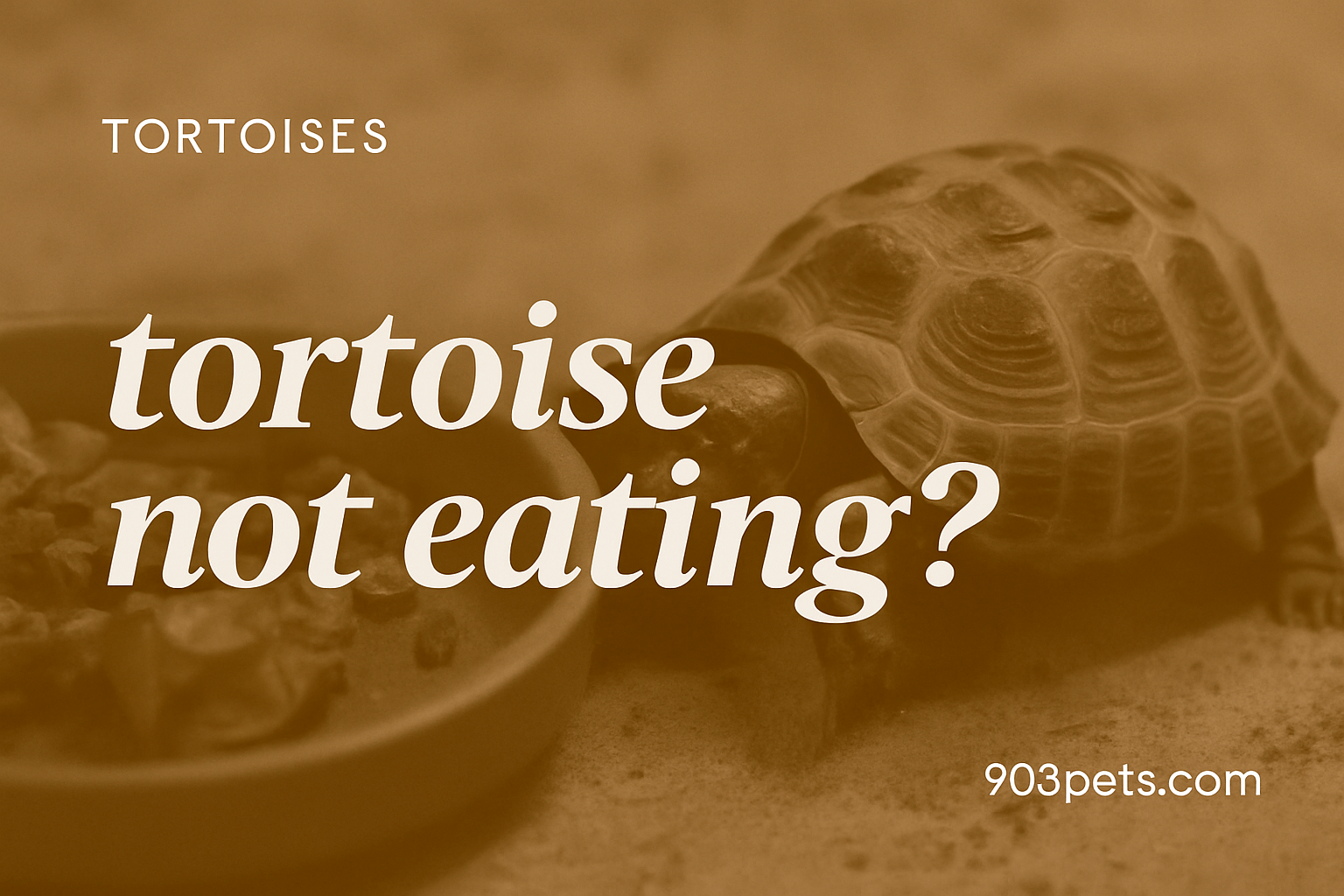
Few things worry a tortoise owner more than watching their pet refuse food. Tortoises are usually enthusiastic eaters, so when they turn their nose up at a plate of greens, something is off.
The good news is that in most cases, the cause is environmental and fixable. Tortoises are ectotherms (cold-blooded), which means their entire metabolism depends on external conditions. Get the temperature or lighting wrong, and their digestive system essentially shuts down. They’re not being picky. They physically can’t eat.
Let’s go through the nine most common reasons your tortoise isn’t eating and, more importantly, what to do about each one.
1. The Enclosure Is Too Cold
This is the number one cause of appetite loss in captive tortoises, and it’s not even close. If I had to bet on a single reason your tortoise stopped eating, I’d put money on temperature.
Tortoises need external heat to power their metabolism. Without adequate warmth, they literally cannot digest food. Their gut slows to a crawl, and eating would cause the food to rot in their stomach, so they instinctively refuse meals.
What to check:
- Basking spot temperature: should be 95-105°F (measured with a temp gun, not a stick-on thermometer)
- Warm side ambient temp: 80-85°F
- Cool side: 70-75°F
- Nighttime: shouldn’t drop below 65°F for most species
The fix:
- Add or upgrade your basking bulb (a standard incandescent flood bulb works well)
- Use a ceramic heat emitter for nighttime heat if the room is cold
- Measure temperatures with a digital probe thermometer or infrared temp gun, not the cheap stick-on dial gauges (those are notoriously inaccurate)
- Make sure the basking spot is close enough to the heat source. A bulb that’s too high produces warmth you can feel with your hand but doesn’t create a hot enough basking zone at tortoise level.
After correcting the temperature, give your tortoise 2-3 days. Most start eating within 24-48 hours once they warm up.
2. Incorrect or Missing UVB Lighting
UVB light is not optional for tortoises. They need it to synthesize vitamin D3, which allows them to absorb calcium from their food. Without proper UVB, tortoises develop metabolic bone disease (MBD) and lose their appetite well before visible bone deformity shows up.
What to check:
- Do you have a UVB bulb? (A regular light bulb produces zero UVB)
- Is it a tube-style (T5 or T8) or compact/coil? (Tube-style is much better for tortoises)
- How old is the bulb? UVB output degrades. Replace every 6-12 months even if the bulb still produces visible light.
- How far is the bulb from the tortoise? T5 bulbs work at 12-18 inches; T8 bulbs need to be 6-10 inches away.
- Is there glass or plastic between the bulb and the tortoise? Both block UVB.
The fix:
- Install a T5 HO UVB tube (Arcadia 12% or Zoo Med Reptisun 10.0) spanning at least 2/3 of the enclosure length
- Replace the bulb every 6 months (mark the install date with a marker on the fixture)
- Ensure no glass or plastic is blocking the UVB output
For a complete breakdown of lighting requirements, check out our guide to tortoise lighting.
3. Dehydration
This one surprises many tortoise owners. “But it’s a desert animal!” Not exactly. Even desert tortoise species need regular access to water, and dehydration causes appetite loss faster than most people realize.
A dehydrated tortoise will often refuse food because the dry food would pull moisture from its already-depleted body during digestion. It’s a survival instinct.
Signs of dehydration:
- Sunken eyes
- Wrinkled, dry skin on the legs and neck
- Thick, white urates (the white part of their waste) instead of a more liquid consistency
- Lethargy
- Loss of appetite
The fix:
- Soak your tortoise in lukewarm (85°F) water for 15-20 minutes. The water level should reach the tortoise’s chin. Tortoises drink and absorb water through their cloaca during soaks.
- Soak 2-3 times per week as a standard routine (daily for dehydrated individuals)
- Provide a shallow water dish in the enclosure at all times
- Mist greens with water before offering them
Many tortoises resume eating within a day or two after proper rehydration.
4. Stress from a New Environment
Just brought your tortoise home? A new tortoise in a new enclosure may refuse food for several days to two weeks. This is normal and doesn’t necessarily mean anything is wrong.
Tortoises are creatures of routine. New smells, new substrate, different lighting, being transported, handling by strangers at the pet store or breeder… it all adds up.
The fix:
- Minimize handling for the first week
- Keep the enclosure in a quiet area away from foot traffic, loud TVs, and other pets
- Offer food daily but don’t hover or fuss if they don’t eat
- Provide hiding spots so the tortoise feels secure
- Maintain correct temperatures and lighting (environmental issues during adjustment makes everything worse)
If your new tortoise still hasn’t eaten after 10-14 days and the environment is correct, consult a reptile vet.
For more on settling a new tortoise in, see our beginner’s introduction to tortoises as pets.
5. Hibernation Instinct (Brumation)
As days get shorter and temperatures drop in fall and winter, many tortoise species feel the pull to brumate (the reptile equivalent of hibernation). Even indoor tortoises can sense seasonal light changes, and some will reduce or stop eating in response.
This is natural for species like Russian tortoises, Hermann’s tortoises, and Horsfield’s tortoises. It is NOT natural for tropical species like red-footed tortoises or sulcatas, which don’t brumate in the wild.
What to do:
- If you want to prevent brumation (recommended for most pet owners), keep temperatures and light cycles consistent year-round. Use a timer to maintain 12-14 hours of light daily.
- If your tortoise is an experienced brumator and you choose to allow it, consult with your vet first. The tortoise needs to be healthy and have an empty gut before brumation.
- A tortoise that’s trying to brumate but is kept too warm will be sluggish and off food. Either commit to proper brumation conditions or fully prevent it by maintaining summer-like conditions.
6. Wrong Food Being Offered
Tortoises can be surprisingly particular about what they eat, and different species have very different diets.
Common diet mistakes:
| Mistake | Why It’s a Problem | What to Offer Instead |
|---|---|---|
| Only iceberg lettuce | Almost no nutrition, mostly water | Romaine, dandelion greens, endive, escarole |
| Too much fruit | Sugar causes digestive issues in most species | Limit fruit to 5-10% of diet (tropical species can have more) |
| Same food every day | Tortoises get bored and may refuse familiar foods | Rotate 4-6 different greens throughout the week |
| Dog or cat food | Too much protein, causes pyramiding and organ damage | Species-appropriate greens, hay, and occasional protein for omnivorous species |
| No variety in color/texture | Tortoises are visual eaters and are attracted to bright colors | Mix in flowers (hibiscus, dandelion flowers, rose petals) |
Pro tip: If your tortoise refuses new foods, try mixing them with a food it already likes. Dandelion greens are almost universally accepted by tortoises and make a great base for introducing new items. Edible flowers like hibiscus are also great “enticer” foods.
7. Illness
Sometimes a tortoise stops eating because it’s sick. This is harder to diagnose at home, but there are warning signs to watch for.
Red flags that suggest illness:
- Runny nose or bubbling at the nostrils (respiratory infection)
- Swollen or closed eyes
- Soft or discolored shell
- Unusual lumps or swelling
- Diarrhea or unusual-smelling waste
- Wheezing or open-mouth breathing
- Significant lethargy (beyond normal resting behavior)
Respiratory infections are particularly common in tortoises kept in conditions that are too cold or too humid. They’re treatable with antibiotics but require a vet visit.
The fix: See a reptile vet. I want to be straightforward about this. If your tortoise shows signs of illness, a vet visit isn’t optional. Tortoises are very good at hiding illness until it’s advanced. By the time you notice symptoms, the problem has usually been building for weeks.
Find a reptile vet through the Association of Reptilian and Amphibian Veterinarians (ARAV) directory. Not all vets treat reptiles, and a cat-and-dog vet may not have the expertise for tortoise care.
8. Parasites
Internal parasites (particularly pinworms and flagellates) are common in both wild-caught and captive-bred tortoises. A low parasite load might not cause obvious symptoms, but a heavy infestation will reduce appetite, cause weight loss, and produce unusual stools.
Signs that suggest parasites:
- Weight loss despite eating (early stages)
- Decreased appetite (moderate to heavy load)
- Visible worms in feces
- Loose, smelly, or unusually colored stools
- General decline in activity level
The fix: Get a fecal test done by your reptile vet. This is inexpensive (usually $25-50) and will identify what parasites are present so appropriate treatment can be prescribed. Many experienced tortoise keepers do annual fecal checks as routine preventive care.
Don’t use over-the-counter dewormers without veterinary guidance. The wrong dewormer at the wrong dose can be more harmful than the parasites.
9. Pain or Injury
A tortoise with a mouth injury, beak overgrowth, or shell damage may stop eating due to pain. Beak overgrowth is particularly common in captive tortoises that don’t have access to natural foods and rough surfaces that wear down the beak.
What to check:
- Is the beak overgrown, misaligned, or cracked? A healthy tortoise beak should be relatively even and allow the mouth to close properly.
- Any visible injuries or sores on the face, mouth, or limbs?
- Shell damage, cracks, or soft spots?
- Signs of eye inflammation or discharge?
The fix: A reptile vet can trim an overgrown beak (don’t try this at home). For other injuries, veterinary care is needed. Prevent beak overgrowth by offering cuttlebone for calcium and hard foods like squash that naturally wear down the beak.
When to See a Vet: The Decision Checklist
Not every skipped meal requires a vet visit. Use this checklist to decide:
| Situation | Action |
|---|---|
| Skipped 1-2 meals, acting normal, temps are correct | Monitor. Offer food again tomorrow. |
| Not eating for 3-5 days, no other symptoms | Check all environmental factors (temp, UVB, hydration). Fix any issues. Soak daily. |
| Not eating for 7+ days | Vet visit recommended even if no other symptoms |
| Not eating AND showing other symptoms (runny nose, lethargy, swelling) | Vet visit immediately |
| New tortoise, not eating for 5-7 days | Likely adjustment stress. Ensure environment is perfect and wait. |
| Stopped eating in fall/winter, species that brumates | Check if brumation instinct. Adjust lighting or allow supervised brumation. |
How to Encourage a Tortoise to Eat
Once you’ve addressed the underlying cause, these tricks can help jumpstart appetite:
- Warm soak before feeding. A 15-minute soak in 85°F water gets the metabolism going and often triggers appetite. Try feeding immediately after soaking.
- Offer food in bright morning light. Tortoises are most active and hungry in the morning after basking for a bit.
- Use “enticer” foods. Bright-colored foods like strawberries (small amounts), hibiscus flowers, dandelion flowers, and butternut squash tend to attract tortoises that are reluctant to eat their greens.
- Chop or shred greens finely. Some tortoises, especially juveniles, prefer smaller pieces they can bite easily.
- Hand-feed. Holding a piece of food directly in front of your tortoise’s face can trigger a feeding response, especially with aromatic foods.
- Mix old favorites with new foods. If your tortoise has stopped eating a food it previously liked, it might just want variety. Mix in something new.
For more on proper enclosure setups that keep your tortoise healthy and eating well, visit our indoor tortoise enclosure guide.
Final Thoughts
A tortoise that won’t eat is almost always telling you something about its environment. Before you panic, go through the basics: check your temperatures with a reliable thermometer, verify your UVB bulb is working and not expired, hydrate your tortoise with a soak, and make sure you’re offering appropriate foods with variety.
Nine times out of ten, fixing the temperature or UVB solves the problem within a few days. But if you’ve checked everything and your tortoise still won’t eat after a week, or if you notice any signs of illness, don’t wait. A reptile vet visit is always worth the peace of mind, and early intervention makes a huge difference in treatment outcomes.
Your tortoise depends entirely on you for its environment. When something is wrong, it can’t tell you in words. Refusing food is one of the loudest ways it communicates. Listen to it.
If you think your pet is ill, call a vet immediately. All health-related questions should be referred to your veterinarian. They can examine your pet, understand its health history, and make well informed recommendations for your pet.
903pets.com Staff