You just brought home your first hamster and you’re staring at a bag of food wondering how much to put in the bowl. Or maybe you’ve had hamsters for a while but you’re not totally sure if you’re doing the food thing right. Either way, I’ve been there.
- What Should I Feed My Hamster?
- Seed Mixes vs. Pellets
- Recommended Hamster Food Brands
- How Much Should I Feed My Hamster Per Day?
- When and How Often to Feed Your Hamster
- Should I Keep the Bowl Full All the Time?
- Fresh Foods: Vegetables and Fruits
- Safe Vegetables for Hamsters
- Safe Fruits for Hamsters
- Protein: Yes, Hamsters Need It
- Can Hamsters Eat…? Common Questions
- Can Hamsters Eat Peanuts or Peanut Butter?
- Can Hamsters Eat Meat?
- Can Hamsters Eat Bread?
- Can Hamsters Eat Cheese?
- What About Popcorn?
- Treats and Snacks: The 10% Rule
- Special Considerations for Dwarf Hamsters
- Water: How Much Do Hamsters Drink?
- Can You Overfeed a Hamster? Signs to Watch For
- Common Feeding Mistakes
- Foods That Are Dangerous or Deadly to Hamsters
- Hamster Food Chart: Do's and Don'ts
- Sample Weekly Feeding Plan
- How Long Can a Hamster Go Without Food?
- Final Thoughts
- Resources and References
- Related Hamster Articles
After years of keeping hamsters and way too many hours reading veterinary nutrition studies, I put together everything you need to know about feeding hamsters in one place. What to feed, how much, how often, what to avoid, and some mistakes that even experienced hamster owners make.
Don’t forget to check out our calculators when you’re done.
What Should I Feed My Hamster?
Pet hamsters need balanced, species-appropriate food. Not rat food, not guinea pig food, not birdseed from the garage. Hamster food specifically.
The best hamster foods contain 12-18% protein, 3-6% fat, and zero added sugars, artificial flavors, or artificial colorings. Pregnant and nursing females need protein levels closer to 24%.
There are two main types of commercial hamster food: seed mixes and pellets. Both have pros and cons.
Seed Mixes vs. Pellets
Seed-based mixes are popular because hamsters love foraging through them. The downside? Picky eaters will pick out their favorite bits (usually the sunflower seeds and corn) and leave the nutritious stuff behind. That’s like a kid eating only the marshmallows from Lucky Charms.
Pellet foods solve this problem because every piece has the same nutritional profile. Your hamster can’t play favorites. The trade-off is that pellets don’t satisfy the foraging instinct as well.
My recommendation? Use a mix of both. A quality pellet as the base with a seed mix scattered through the bedding for foraging enrichment. This gives you nutritional consistency plus mental stimulation.
Recommended Hamster Food Brands
Not all hamster food is created equal. Here are brands that actually meet the nutritional standards your hamster needs:
- Oxbow Essentials Hamster & Gerbil Food – Pellet-based, prevents selective eating, solid nutrition profile. This is what I use as a base diet.
- Higgins Sunburst Hamster Food – A quality seed mix with good variety. Great for scatter feeding.
- Mazuri Rat & Mouse Diet – Low sugar content, sometimes recommended as a supplement especially for diabetes-prone dwarf hamsters.
Avoid cheap grocery store hamster food. If the ingredients list starts with corn or the package is covered in pictures of happy hamsters next to colorful pellets, that’s marketing, not nutrition.
How Much Should I Feed My Hamster Per Day?
This is where most people get it wrong. The amount varies by species, and it’s less than you think.
| Breed | Daily Food Amount | Body Weight |
|---|---|---|
| Syrian (Golden) | 1.5-2 tablespoons | 120-200g |
| Campbell’s Dwarf | 1 tablespoon | 30-50g |
| Winter White Dwarf | 1 tablespoon | 20-45g |
| Roborovski Dwarf | 1 tablespoon | 20-25g |
| Chinese Hamster | 1-1.5 tablespoons | 30-45g |
Dwarf hamsters eat surprisingly close to the same volume as Syrians despite being half the size. That faster metabolism burns through food quickly.
These numbers are starting points. Watch your hamster’s weight over two to three weeks and adjust. If they’re gaining fast, pull back slightly. If they seem lethargic or thin, bump it up.
When and How Often to Feed Your Hamster
Hamsters are crepuscular, meaning they’re most active at dawn and dusk. The best time to fill their bowl is in the evening when they wake up and start their day. Yes, their “morning” is your evening.
Recommended daily schedule:
- Evening (6-8 PM): Fill food bowl with daily portion of pellet/seed mix
- Evening: Add a small piece of fresh vegetable
- Morning: Remove any uneaten fresh food
- 1-2x per week: Offer a protein treat or fruit piece
You do not need to feed twice a day. One evening feeding is fine. Here’s something most new owners don’t realize: hamsters hoard. They stuff food into their cheek pouches and stash it around their cage. Even when the bowl looks empty, your hamster probably has a pantry hidden in the bedding somewhere.
In fact, some pet hamsters eat a small bit of food about every 2 hours throughout the night. That’s way more than a midnight snack.
Should I Keep the Bowl Full All the Time?
No. We do not recommend keeping the food dish full at all times or just dumping a fixed amount every day without checking. When there’s always food available, your hamster becomes a picky eater. They’ll eat only the tastiest bits and leave the nutritious pieces to go to waste.
This selective eating leads to nutritional deficiencies, which leads to health problems. Let the bowl empty before refilling so they eat everything, not just the hamster equivalent of candy.
Here’s a better approach: give your hamster the recommended amount and monitor how long it takes for the bowl to empty. Do this over two weeks. Find the average. That becomes your personal feeding rhythm for that specific hamster.
Fresh Foods: Vegetables and Fruits
Fresh produce should make up about 10-15% of your hamster’s total diet. Offer a small piece of vegetable daily and fruit once or twice a week. Fruit is high in sugar, so treat it like a treat, not a staple.
Safe Vegetables for Hamsters
These vegetables are safe in small amounts:
- Broccoli
- Cucumber
- Carrots (raw only, never cooked)
- Bell pepper
- Zucchini
- Cauliflower
- Romaine lettuce
- Red leaf lettuce
- Curly-leaf lettuce
- Spinach (very small amounts)
- Celery (high water content, moderate carefully)
Carrots are actually a solid choice. They provide Vitamin A and Vitamin C, which complement each other. Vitamin A helps the body use Vitamin C more effectively. But too much Vitamin C causes diarrhea in hamsters, and because they’re so small, diarrhea can turn deadly fast. Moderation is the word of the day, every day.
Avoid iceberg lettuce and other light-colored lettuces. They’re mostly water with almost no nutritional value, and too much can cause digestive upset.
Always wash produce thoroughly and remove uneaten fresh food within 24 hours. Mold in a hamster cage is a serious health hazard.
Safe Fruits for Hamsters
Hamsters can eat very small amounts of low-acid fruits:
- Apple (no seeds, no skin)
- Banana (tiny piece)
- Blueberries
- Strawberry
- Pear
- Melon
- Grapes (no seeds)
Citrus fruits are dangerous for hamsters and should not be given to them under any circumstances. No oranges, limes, lemons, or grapefruit.
903pets.com
A quick word about apple seeds: many sources downplay the cyanide risk because the amount per seed is tiny. For a human, sure. For a 30-gram hamster? The math is very different. Given a hamster’s tiny frame, size, and metabolic rate, it doesn’t take much of any toxic substance to cause real damage. Remove apple seeds and skin every time.
Protein: Yes, Hamsters Need It
Hamsters are omnivores. In the wild, they eat insects regularly. Your pet hamster needs some animal protein too, about once or twice a week.
Good protein options:
- Dried mealworms – Convenient, most hamsters go absolutely nuts for these
- Small piece of hard-boiled egg
- Plain cooked chicken (tiny amount, no seasoning)
- A cricket or super-worm (live feeder insects)
Keep protein treats small. A piece the size of your pinky fingernail is plenty. If you use live feeder insects, remove them if your hamster doesn’t eat them within a few hours. Crickets can actually chew on your hamster if left in the cage. Not fun for anyone.
Can Hamsters Eat…? Common Questions
Can Hamsters Eat Peanuts or Peanut Butter?
Peanuts: technically yes, but I don’t recommend it. If you insist, limit it to half of a single food-grade, unsalted peanut no more than once per week. Start with an even smaller amount to test for allergies and stomach issues.
Peanuts are high in fat and quickly become unhealthy. Many commercial hamster foods already contain peanuts, so you could be tripling their nut intake without realizing it. We don’t feed peanuts to our hamsters at all because the risks outweigh the rewards when there are plenty of good vegetables available.
Peanut butter? Hard no. Most peanut butter is loaded with salt, sugar, and other ingredients that are terrible for hamsters. Even the “natural, organic, unsweetened” stuff has a bigger problem: it gets stuck in cheek pouches. When that happens, hamsters try to move it forward with their paws, but peanut butter is sticky. This can lead to impacted cheek pouches and infection.
If you absolutely must give peanut butter (and I really wish you wouldn’t), spread a razor-thin layer on a dish so they lick it rather than pouch it.
Can Hamsters Eat Meat?
Yes, but only occasionally and only certain types. A hamster’s natural diet is mostly seeds, grains, fruits, vegetables, and grassy plants. Meat is the occasional insect or worm they stumble across.
Stick to feeder insects like crickets, mealworms, or super-worms. Skip the beef, pork, and poultry. It’s not what their digestive system is built for as a primary protein source.
Can Hamsters Eat Bread?
Your hamster won’t die from a tiny piece of bread, but it’s not good for them. Bread is high in carbs with almost no nutritional value for a hamster. A high-carb diet leads to obesity and nutritional deficiencies. Stay away from bread, bagels, and toast even if your hamster seems interested.
Can Hamsters Eat Cheese?
In extreme moderation and only occasionally. Cheese is calorie-dense and there are better protein options available like mealworms. Don’t treat your hamster like a cartoon mouse. A tiny piece the size of a pea, once every couple weeks at most.
What About Popcorn?
Believe it or not, one piece of a single kernel of air-popped popcorn is fine as a very rare treat. Air-popped specifically. No oil, no salt, no butter, no seasoning. Remove the kernel and let it cool completely. This is a “fun fact” treat, not a regular part of their diet.
Treats and Snacks: The 10% Rule
Treats should make up no more than 10% of your hamster’s total diet. For regular-sized hamsters, that’s about 1 tablespoon of total treats per week. For dwarf hamsters, cut that to half a tablespoon.
Break it up however you want. Maybe half a tablespoon twice a week, or a quarter tablespoon four times a week. The goal is nutritional balance and preventing obesity.
Good natural treats: a plain unsalted pumpkin seed, a tiny piece of walnut, a single blueberry, a small broccoli floret. These give your hamster something to look forward to without overloading them with sugar or fat.
Commercial treats like Kaytee hamster treats are fine in small amounts. Yogurt drops? Use sparingly. They’re sugary.
Special Considerations for Dwarf Hamsters
If you have a Campbell’s dwarf hamster, pay extra attention here. Campbell’s dwarfs are prone to diabetes. This changes the rules on sugar.
Limit fruit to very small amounts once a week, or skip it entirely. Avoid corn (high glycemic index). Stick to vegetables and protein as treats instead of anything sweet.
What do dwarf hamsters eat differently? The same base diet as Syrians, just less of it. Look for food with smaller pieces since dwarf hamsters have smaller mouths. Mazuri Rat & Mouse Diet is sometimes recommended as a supplement for dwarfs because of its low sugar content.
Water: How Much Do Hamsters Drink?
A hamster drinks about 10-30 milliliters of water per day depending on size and diet. Syrians drink more, dwarfs less. Hamsters eating lots of fresh vegetables may drink slightly less since they get moisture from produce.
Always use a bottle-style water dispenser rather than an open dish. Open dishes get contaminated with bedding and droppings within hours. Check the water bottle daily. Make sure the ball bearing in the spout works and the bottle hasn’t leaked or run dry.
How long can a hamster go without water? Larger hamsters like Syrians should never go more than 3-4 days without water. Dwarf hamsters shouldn’t go more than 2-3 days. But honestly, there’s no reason your hamster should ever go without water. If you’re traveling, get a responsible friend to check on them daily. Show them how to check the water bottle before you leave.
Can You Overfeed a Hamster? Signs to Watch For
Yes, and it’s the most common feeding mistake. Those little cheek pouches are hard to resist. But an overweight hamster is not a happy hamster.
Signs your hamster is overfed:
- Visible weight gain
- Difficulty running on the wheel
- Less willingness to move around
- Food hoards growing excessively large
Signs your hamster is underfed:
- Weight loss
- Lethargy
- Dull coat
- Less activity on the wheel
- Biting cage bars (stress behavior)
Weigh your hamster weekly on a small kitchen scale. A healthy Syrian weighs 120-200 grams. Dwarf hamsters range from 20-50 grams depending on species. Track the trend line, not individual weigh-ins.
Common Feeding Mistakes
Even experienced hamster owners mess these up:
- Refilling a half-full bowl. Your hamster ate the good stuff and left the rest. If you keep topping off, they’ll never eat the nutritious pieces. Let it empty first.
- Too many sunflower seeds. Hamsters are obsessed with them. They’re also loaded with fat. Occasional treat, not a staple.
- Feeding human junk food. No chocolate. No candy. No cookies. No chips. These can be toxic or cause serious digestive issues. Just don’t.
- Not enough variety. A diet of only pellets gets boring and may miss micronutrients. Rotate fresh produce and offer occasional protein treats.
- Ignoring the food hoard. Your hamster stashes food in the bedding. Fresh food in that stash will rot. Check hoard spots during cage cleaning and remove anything perishable.
- Sudden diet changes. Switching foods abruptly causes digestive upset. Transition over a week by mixing old and new food together, gradually shifting the ratio.
- Trusting pet store advice blindly. The employee at the chain pet store is not a veterinary nutritionist. Some of the food they recommend is junk, and the portions they suggest are often wrong. Do your own research.
Foods That Are Dangerous or Deadly to Hamsters
This is the list you need to print out and tape to the wall. These foods are not just unhealthy. Some of them can kill your hamster.
Never feed your hamster:
- Almonds (contain amygdalin, which converts to cyanide)
- Apple seeds (same cyanide risk, amplified by hamster’s tiny size)
- Citrus fruits (oranges, lemons, limes, grapefruit)
- Chocolate (all types, including dark and white)
- Onions (all varieties)
- Garlic
- Raw potatoes
- Tomatoes
- Rhubarb (raw)
- Beans (raw)
- Any sugary foods
- Any salty foods
- Any junk food or processed human food
- Black or white pepper
- Cedar or pine shavings (not food, but hamsters chew bedding)
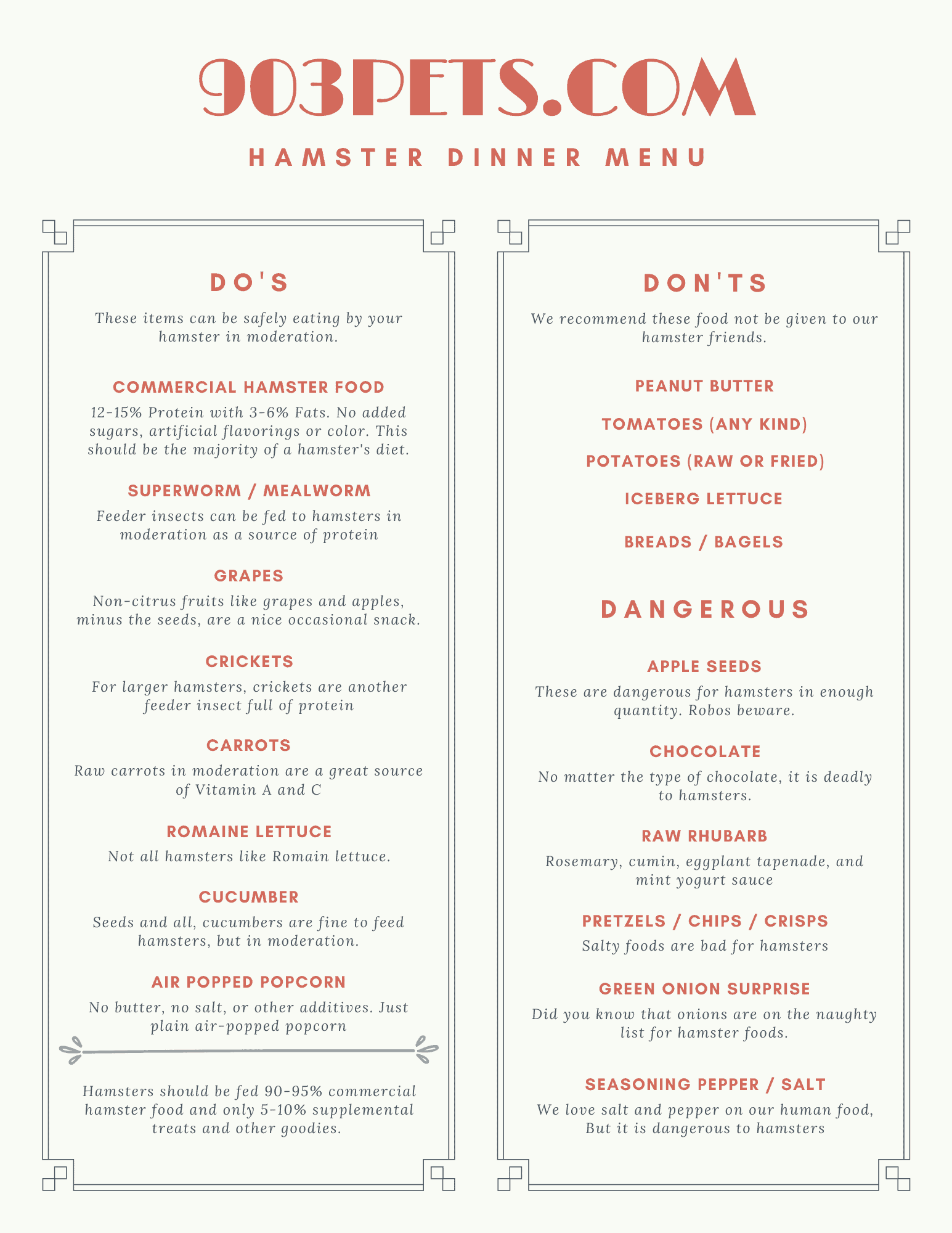
Hamster Food Chart: Do’s and Don’ts
Sample Weekly Feeding Plan
Here’s what a week of feeding might look like for a Syrian hamster. Adjust portions down for dwarfs.
| Day | Base Food | Fresh Food | Treat |
|---|---|---|---|
| Monday | 2 tbsp pellet/seed mix | Small broccoli floret | – |
| Tuesday | 2 tbsp pellet/seed mix | Thin carrot slice | – |
| Wednesday | 2 tbsp pellet/seed mix | Cucumber piece | 1 dried mealworm |
| Thursday | 2 tbsp pellet/seed mix | Bell pepper slice | – |
| Friday | 2 tbsp pellet/seed mix | Romaine leaf piece | – |
| Saturday | 2 tbsp pellet/seed mix | Zucchini slice | 1 blueberry |
| Sunday | 2 tbsp pellet/seed mix | Cauliflower piece | – |
Notice the pattern: base food every day, one fresh vegetable daily, and treats only twice per week. Simple. Consistent. Your hamster will thrive on this kind of routine.
How Long Can a Hamster Go Without Food?
Syrian and Chinese hamsters should not go without food or water for more than 3-4 days. Dwarf hamsters are even more sensitive at 2-3 days max.
Like humans, hamsters can survive without food longer than without water. But don’t test either limit. If you’re going away for a weekend, get someone reliable to check on them. Train that person beforehand. Show them where the food is, how the water bottle works, and what to look for.
Final Thoughts
Feeding your hamster right doesn’t have to be complicated. Start with 1-2 tablespoons of quality food mix per day, add fresh vegetables regularly, keep clean water available always, and pay attention to weight and behavior. That’s really the whole system.
The biggest mistake most new owners make is overfeeding. And honestly, it’s hard not to. Those cheek pouches are ridiculously cute when they’re full. But a lean, active hamster is a healthy hamster that lives longer and has fewer vet bills.
Measure your portions. Rotate your treats. Let the bowl empty before refilling. Your hamster is counting on you to get this right.
Resources and References
- Nibbles & Eats – Easy small pet food facts, ingredients, analysis, and recommendations
- Maryam Hassanpour Moghadam, Mohsen Imenshahidi, and Seyed Ahmad Mohajeri. Journal of Medicinal Food. Jun 2013.558-563. http://doi.org/10.1089/jmf.2012.2664
- National Research Council (US) Subcommittee on Laboratory Animal Nutrition. Nutrient Requirements of Laboratory Animals: Fourth Revised Edition, 1995. Washington (DC): National Academies Press (US); 1995. 5, Nutrient Requirements of the Hamster. https://www.ncbi.nlm.nih.gov/books/NBK231928/
- Advanced Solutions International, I. (n.d.). Biology Of The Hamster. Retrieved from https://lvma.org/LVMA/For_Pet_Owners/Educational_Material/Biology_of_the_Hamster.aspx
Related Hamster Articles
Want to learn more about hamster care? Find out how much bedding your hamster needs, check if your hamster wheel is actually safe, and learn about 13 common hamster behaviors explained. Looking for a cage? See our complete hamster cage buyer’s guide.
If you think your pet is ill, call a vet immediately. All health-related questions should be referred to your veterinarian. They can examine your pet, understand its health history, and make well informed recommendations for your pet.
903pets.com Staff