
Let me be direct with you: most hamster cages sold in pet stores are too small. I know that’s a strong statement, but it’s backed by research and by thousands of hamster owners who have watched their pets go from stressed and cage-biting to calm and happy after upgrading to proper housing.
- The Cage Size Problem: Why Pet Stores Get It Wrong
- What "Unbroken Floor Space" Means
- Size Requirements by Breed
- Why Bigger Cages Make Better Hamsters
- Our Cage Ratings: Real Data, Real Testing
- Our Top Hamster Cage Picks
- Best Overall: Niteangel Vista Hamster Cage – Medium
- Best Budget: Aqueon 40 Gallon Breeder Tank
- Best for Syrian Hamsters: Niteangel Vista – Large
- Best for Dwarf Hamsters: Aqueon 40 Gallon Breeder Tank
- Cage Materials: What Works and What Doesn't
- Wire Cages: Proceed with Caution
- Glass Aquariums: Our Recommended Option
- Plastic Habitats: Usually a Bad Idea
- Wooden Enclosures: Good If Sealed
- Price Comparison: What Does Good Housing Actually Cost?
- Hamster Tanks
- Hamster Enclosures
- Hamster Cages
- Best Value by Size Range
- Don't Forget Bedding Depth
- Cages You Should NOT Buy
- What to Look For When Choosing a Cage: Quick Checklist
- Shape: Does It Matter?
- The DIY Option: Build Your Own
- A Note on Our Measurements
- Bottom Line
- Related Hamster Care Guides
We tested, researched, and got feedback from readers on dozens of hamster cages. This guide covers everything: what size you actually need, what materials work best, our top picks with real pricing data, and which popular cages you should avoid no matter how cute they look on the shelf.
The Cage Size Problem: Why Pet Stores Get It Wrong
Walk into any big-box pet store and you’ll see rows of colorful hamster cages marketed as “complete habitats.” Tubes, platforms, tiny wheels. They look fun. Kids love them. And they are absolutely terrible for hamsters.
The internet will tell you the minimum cage size is 12″ W x 12″ D x 24″ H. That gives you about 288 square inches of floor space. That is wrong. We see hamsters in cages that small all the time, and they’re stressed, aggressive, chewing cage bars, and developing health problems.
Here’s what the research actually says:
German animal welfare standards, which are among the most rigorous in the world for small animal care, set the minimum enclosure size for hamsters at 100 cm x 50 cm (roughly 775 square inches). The German Veterinary Association for Animal Welfare has published guidelines specifically stating that smaller enclosures lead to stereotypic behaviors like bar chewing, which are indicators of chronic stress.
The Hamster Hideout community, one of the largest and most respected hamster care communities online, recommends a minimum of 450 square inches of unbroken floor space as the absolute bare minimum, with 600+ being the target.
Ethical hamster breeders like Nantucket Hamstery agree: “The bigger the home the hamster is housed in, the happier the hamster will be. Hamsters will not be happy or healthy in a small cage.”
Our recommendation at 903Pets: 450 square inches minimum, 600+ square inches as the real target. We know that’s bigger than what most pet stores sell. That’s kind of the point.
What “Unbroken Floor Space” Means
This is important. When we say 450 square inches, we mean a single continuous floor area. Not total space across multiple levels. Not tube length added to floor space. Not a creative math exercise that makes a tiny cage seem bigger.
Manufacturers love to include tubes, tunnels, and platforms in their “total space” calculations. To a hamster, that’s useless. Floor space is what matters for running, burrowing, foraging, and just being a hamster. A cage with 300 square inches of floor space and 200 square inches of tubes is still a 300-square-inch cage.
Size Requirements by Breed
Different hamster breeds have different needs. A Syrian hamster is significantly larger than a Robo and needs more room.
| Breed | Minimum Floor Space | Recommended Floor Space | Minimum Height |
|---|---|---|---|
| Syrian (Golden) | 450 sq. in. | 600-1000+ sq. in. | 18″+ (for bedding depth) |
| Campbell’s Dwarf | 450 sq. in. | 600+ sq. in. | 16″+ |
| Winter White Dwarf | 450 sq. in. | 600+ sq. in. | 16″+ |
| Roborovski Dwarf | 450 sq. in. | 600+ sq. in. | 16″+ |
| Chinese Hamster | 450 sq. in. | 600+ sq. in. | 16″+ |
Yes, even dwarf hamsters need 450 square inches. They’re smaller but just as active. In some ways more so. A Robo hamster can run miles on its wheel in a single night.
Why Bigger Cages Make Better Hamsters
This isn’t about luxury. It’s about biology. Here’s what a properly sized cage lets your hamster do:
- Burrow properly. Hamsters are natural burrowers. A taller enclosure means deeper bedding (6 inches minimum, 10-15 inches ideal). Deep bedding reduces stress and promotes natural behavior.
- Forage. Instead of dumping food in a bowl, scatter some through the bedding. Your hamster will search for it, just like in the wild. This needs space.
- Run. Hamsters travel miles at night in the wild. A bigger cage with a properly sized exercise wheel gives them that outlet.
- Have zones. Hamsters naturally separate their living space into areas: sleeping, eating, toileting. A cramped cage forces everything into one zone, which stresses them out.
Does your hamster chew on its cage bars? That’s not a cute behavior. It’s a stress response that frequently means the cage is too small. It’s your hamster telling you something is wrong.
Our Cage Ratings: Real Data, Real Testing
We actually evaluated all of these products. This isn’t a list of affiliate links to whatever pays the most. We looked at dimensions, calculated floor space, checked current pricing, and rated everything on size and value.
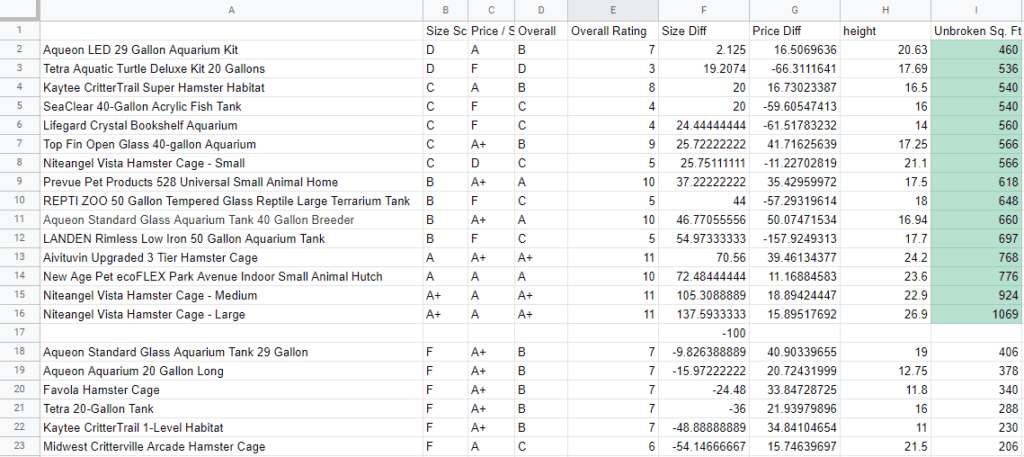
| Hamster Cage / Tank | Size Rating | Price/sq. in. Rating | Overall Rating |
|---|---|---|---|
| Niteangel Vista Hamster Cage – Medium | A+ | A | A+ |
| Niteangel Vista Hamster Cage – Large | A+ | A | A+ |
| Aivituvin Upgraded 3 Tier Hamster Cage | A | A+ | A+ |
| Prevue Pet Products 528 Universal Small Animal Home | B | A+ | A |
| Aqueon Standard Glass Aquarium Tank 40 Gallon Breeder | B | A+ | A |
| New Age Pet ecoFLEX Park Avenue Indoor Small Animal Hutch | A | A | A |
| Aqueon LED 29 Gallon Aquarium Kit | D | A | B |
| Kaytee CritterTrail Super Hamster Habitat | C | A | B |
| Top Fin Open Glass 40-gallon Aquarium | C | A+ | B |
| SeaClear 40-Gallon Acrylic Fish Tank | C | F | C |
| Lifegard Crystal Bookshelf Aquarium | C | F | C |
| Niteangel Vista Hamster Cage – Small | C | D | C |
Our Top Hamster Cage Picks
No drama, no suspense. Here are the cages we recommend, organized by use case.
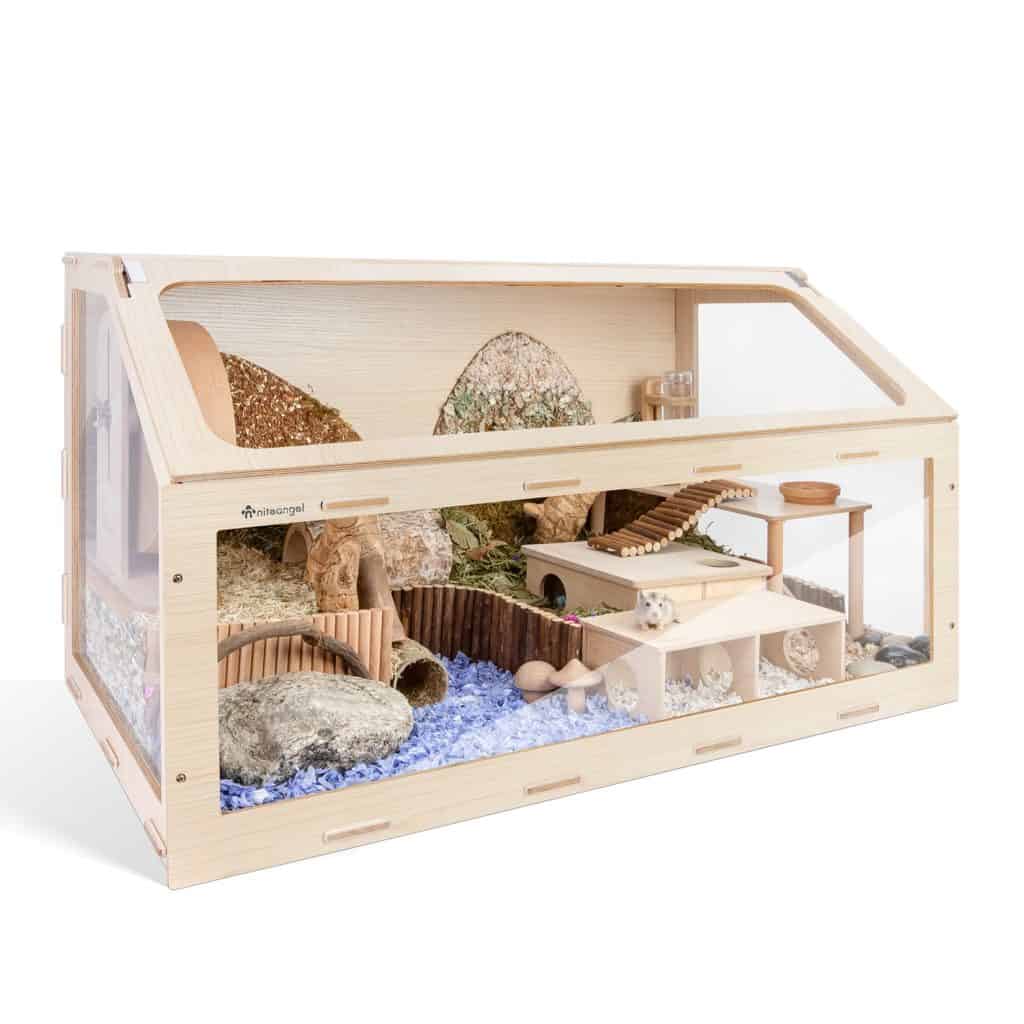
Best Overall: Niteangel Vista Hamster Cage – Medium
924 sq. in. of unbroken floor space at $0.27 per square inch. That’s our best overall winner.
This flat-pack cage assembles in about 20-30 minutes. The slotted design is like a 3D puzzle but way easier, then a few screws hold everything together. One person can do it, two makes it faster.
The viewing window on the front and the angled hinged top lid are both huge. You get great visibility and easy access for feeding, cleaning, and hamster cuddles. The angled lid is particularly smart because you don’t have to reach straight down into the cage.
Made from sealed birchwood and MDF. The sealed finish means urine doesn’t soak through into the wood. That was a concern I had initially, and Niteangel addressed it well.
One caution: the hinged lid needs gentle handling. If kids flip it back aggressively, the hinges could break. Teach them to open it calmly. Your hamster will also thank them for not causing an earthquake.
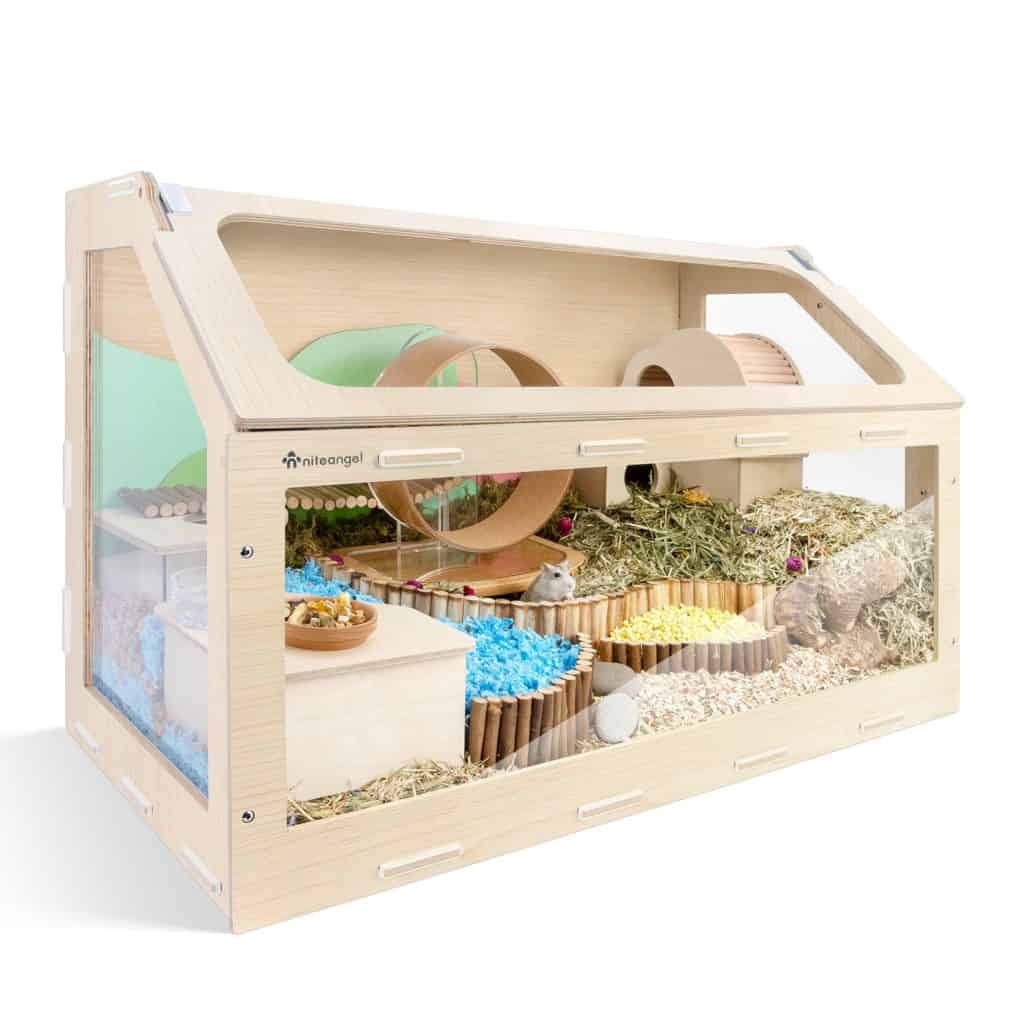
Optional casters are available specifically for this cage, making it easy to move for vacuuming. Nice touch by Niteangel.
Note: Niteangel’s refund policy only covers “unworn or unused” products. Inspect everything when it arrives before using it with your hamster.
Real Owner Review
A user on hamstercentral.com did a detailed review with a cool setup video. Watch it here before buying.
Best Budget: Aqueon 40 Gallon Breeder Tank
660 sq. in. at just $0.17 per square inch. Best value in the entire lineup.
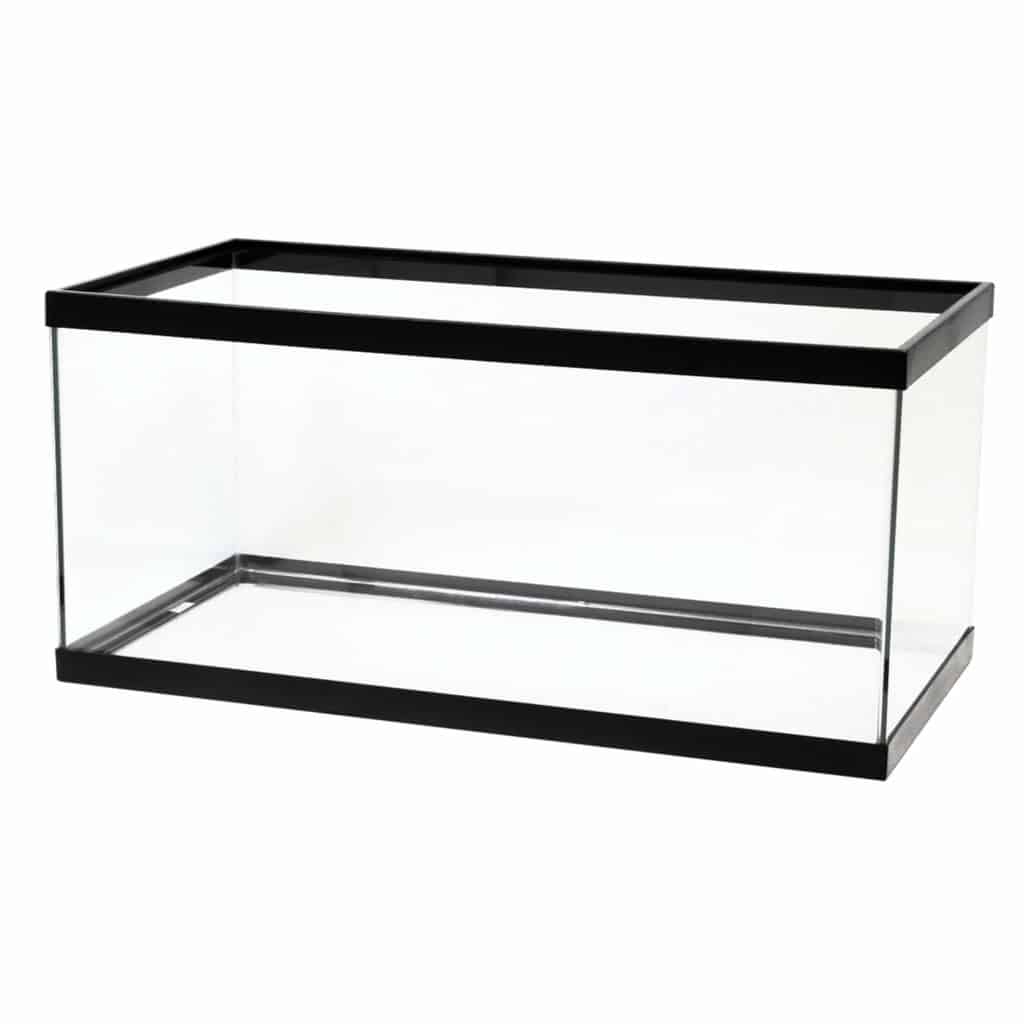
Aquarium tanks have been used as hamster homes for decades, and for good reason. Fish tanks are designed for animals sensitive to chemicals, so they’re inherently safe for hamsters too.
The 36.19″ x 18.25″ x 16.94″ dimensions give you 660 square inches of unbroken floor space with room for 9-10 inches of bedding depth. Solid.
The trade-off: you get nothing but the tank. No lid, no wheel, no accessories. That’s actually a good thing. You choose each piece based on your hamster’s specific needs instead of getting inferior “freebies” that aren’t really free.
You will need a mesh lid. The Zilla Reptile Terrarium Fresh Air Screen Cover in 36″ x 18″ works well and is budget-friendly. Many other options exist at various price points.
One heads up: this tank weighs 58 pounds empty. Make sure whatever furniture you put it on can handle the weight. Nobody wants a tank falling.
Best for Syrian Hamsters: Niteangel Vista – Large
1,069 sq. in. of floor space. This is what a properly housed Syrian hamster looks like.
You’ll need about 7.5 square feet of room space for this one. It’s big. That’s the point. Syrian hamsters can grow to 6-7 inches long and they need room to match.
The large version lets you achieve 15-16 inches of bedding depth in areas you want it. That’s finally reaching the ideal range that research supports for burrowing behavior and stress reduction.
Windows are PET plastic, not glass or acrylic. PET scratches a bit easier than acrylic but is much stronger than glass. If you have kids (and you know what kids are like), this is a meaningful safety feature.
Also available in white laminate to match your furniture. Because apparently hamster cages need to coordinate with the living room now. I’m not judging. I bought the white one.
Best for Dwarf Hamsters: Aqueon 40 Gallon Breeder Tank
Dwarf hamsters can absolutely use larger cages. But if you want a quality, value-focused option, the Aqueon 40-gallon breeder tank works great for dwarfs too. The 660 square inches of floor space and ~17 inches of height give you plenty of room for 10 inches of bedding depth.
Because it’s a standard 40-gallon size, finding mesh lids is easy. You can also build your own lid from a kit if you want a weekend project. We’ve included a video on that below.
If you’d prefer something other than a tank, the Niteangel Vista Small (566 sq. in.) is a decent alternative for dwarf breeds.
Cage Materials: What Works and What Doesn’t
Not all cages are made the same. The material matters for safety, cleaning, ventilation, and your hamster’s wellbeing.
Wire Cages: Proceed with Caution
Wire cages allow good airflow and are often the cheapest option. But there are serious problems.
The biggest issue: most wire cages sold in pet stores are way too small. They’re designed to look attractive to children and be cheap. The shallow plastic bottom doesn’t allow for adequate bedding depth.
Wire rusts over time. Sharp edges can injure feet and legs. For dwarf hamsters, the wire grid spacing can be dangerous. Small hamsters try to squeeze through and get stuck, which can cause injuries or worse.
If you do go with a wire cage, make sure it meets the 450+ square inch floor space requirement and has bar spacing under 1/2 inch for dwarfs.
Glass Aquariums: Our Recommended Option
Glass tanks are one of the best hamster housing options for several reasons. They’re available in many sizes, provide excellent visibility, are easy to clean, and allow for deep bedding. Aquariums designed for fish are safe because fish are sensitive to chemicals, so the glass and sealants are non-toxic.
The main downside is weight and cost. Glass is heavier than other options and typically pricier. But tanks last for years and can be resold for a good portion of your investment.
You’ll need to buy a mesh lid separately. Always use a mesh lid for ventilation. Never use a solid glass lid.
Plastic Habitats: Usually a Bad Idea
Those modular plastic habitats with tubes and levels? They’re the same size problem as wire cages with added disadvantages. Manufacturers count tube space in their size calculations, which is misleading. The actual floor space is typically terrible.
Cleaning is a nightmare because you have to disassemble tubes and levels every time.
Exception: large, plain storage bins (like a 110-quart Sterilite) can make excellent DIY hamster enclosures if you drill ventilation holes in the lid. That’s a separate project, but it works.
Wooden Enclosures: Good If Sealed
Products like the Niteangel Vista are wooden enclosures with sealed finishes. When properly sealed, urine doesn’t penetrate the wood and they’re easy to maintain.
Unsealed wood is a different story. Hamster urine soaks in, creates permanent odors, and can never be fully cleaned. If you’re building a DIY wooden cage, use a pet-safe sealant on all interior surfaces.
Avoid pine and cedar wood entirely. The aromatic oils in these woods are toxic to hamsters, causing respiratory infections and tumors. Use oak, maple, or birch if building custom.
Price Comparison: What Does Good Housing Actually Cost?
We calculated the price per square inch for every cage we evaluated. Here’s the breakdown.
Hamster Tanks
| Tank | Floor Space | Price / Sq. In. |
|---|---|---|
| Aqueon 40 Gallon Breeder | 660 sq. in. | $0.17 |
| Top Fin 40-gallon | 566 sq. in. | $0.19 |
| Aqueon LED 29 Gallon Kit | 460 sq. in. | $0.28 |
| SeaClear 40-Gallon Acrylic | 540 sq. in. | $0.53 |
| Lifegard Crystal Bookshelf | 560 sq. in. | $0.54 |
Hamster Enclosures
| Enclosure | Floor Space | Price / Sq. In. |
|---|---|---|
| Aivituvin 3 Tier | 768 sq. in. | $0.20 |
| Niteangel Vista – Medium | 924 sq. in. | $0.27 |
| Niteangel Vista – Large | 1069 sq. in. | $0.28 |
| Niteangel Vista – Small | 566 sq. in. | $0.37 |
Hamster Cages
| Cage | Floor Space | Price / Sq. In. |
|---|---|---|
| Prevue 528 Universal | 618 sq. in. | $0.22 |
| Kaytee CritterTrail Super | 540 sq. in. | $0.28 |
The average: tanks cost about $0.46/sq. in., enclosures average $0.28/sq. in., and cages average $0.25/sq. in. Cages seem cheapest until you realize most are undersized. Tanks and quality enclosures give you the best value per usable square inch.
Best Value by Size Range
Under 600 sq. in.: Top Fin Open Glass 40-gallon at $0.19/sq. in. The 17.25″ height allows 10+ inches of bedding.
600-800 sq. in.: Aqueon 40 Gallon Breeder at $0.17/sq. in. Best pure value in our entire evaluation.
800-1000 sq. in.: Niteangel Vista Medium at $0.27/sq. in. Cathedral-style top allows 10-12 inches of bedding.
Over 1000 sq. in.: Build your own. The popular IKEA Detolf mod gives about 2,300 square inches at roughly $0.04/sq. in. That’s not a typo.
Don’t Forget Bedding Depth
This is where most new owners miss the mark. Getting the right cage is only half the equation. You need to fill it with enough bedding for your hamster to actually burrow.
We’ve written extensively about hamster bedding depth and even created a bedding calculator to help you figure out how much to buy.
The short version: 6 inches minimum, 10-15 inches ideal. The taller your enclosure, the deeper you can go. The deeper the bedding, the happier and less stressed your hamster will be. Research published in Applied Animal Behaviour Science found that hamsters with 15+ inches of bedding showed significantly fewer stress behaviors.
Why does bedding depth matter? It’s about hamster health, stress reduction, and natural behaviors like burrowing.
903pets.com
Cages You Should NOT Buy
These are popular products that do not meet the 450 square inch minimum. We won’t link to them for hamster housing purposes because we don’t think any hamster should live in them. They may be marketed for hamsters, but marketing isn’t science.
| Product | Size Rating | Overall | Why Not |
|---|---|---|---|
| Aqueon 29 Gallon Tank | F | F | Under 450 sq. in. |
| Aqueon 20 Gallon Long | F | F | Under 450 sq. in. |
| Favola Hamster Cage | F | F | Dangerously small |
| Tetra 20-Gallon Tank | F | F | Under 450 sq. in. |
| Kaytee CritterTrail 1-Level | F | F | Under 450 sq. in. |
| Midwest Critterville Arcade | F | F | Under 450 sq. in. |
I want to be clear about something. I’m not saying the companies that make these are evil. But the hamster cage industry has been selling undersized housing for decades and calling it adequate. Pet stores continue to stock and recommend these cages because they’re cheap and they sell. That doesn’t make them right for your hamster.
What to Look For When Choosing a Cage: Quick Checklist
- Floor space: 450 sq. in. minimum, 600+ recommended
- Height: 16-18″ minimum (allows for deep bedding)
- Ventilation: Mesh lid or ventilated design (never sealed)
- Material safety: No pine/cedar wood, no sharp wire edges, no toxic sealants
- Ease of cleaning: Can you reach all areas? Fewer tight corners = easier maintenance
- Escape-proof: Bar spacing under 1/2″ for dwarfs, secure lids for tanks
- Wheel compatibility: Can you fit a properly sized hamster wheel (8″+ for dwarfs, 10-12″ for Syrians)?
Shape: Does It Matter?
The shape itself isn’t critical, but it affects usable space and cleaning difficulty. Rectangular is ideal. It maximizes floor space and is easy to clean. Fewer corners = less scrubbing.
What matters more than shape is that the floor space is continuous and unbroken. No weird configurations that look big on paper but don’t give your hamster room to actually move.
The DIY Option: Build Your Own
For cages over 1,000 square inches, building your own is usually the most cost-effective route. The IKEA Detolf mod is legendary in the hamster community. You lay the glass cabinet on its side and remove the shelves. About 2,300 square inches of space for around $90.
You can also build custom wooden enclosures. If you go that route, seal all interior surfaces with a pet-safe polyurethane or pond liner. Use oak or maple, never pine or cedar.
For tank owners who need a custom mesh lid, kits are available. Here’s a quick video:
A Note on Our Measurements
When we first did this evaluation, I measured outside dimensions instead of inside dimensions. That means the actual usable floor space for each cage is slightly less than what we reported. The difference is small (maybe 10 square inches here or there) and doesn’t change any of our rankings or recommendations. But I wanted to be upfront about it. Honesty matters more than looking perfect.
Bottom Line
Your hamster’s cage is the single most important purchase you’ll make for them. It’s where they spend their entire life. A cage that’s too small creates a stressed, unhappy hamster that bites, chews bars, and develops health problems.
Get the biggest enclosure you can fit and afford. 450 square inches minimum. 600+ if possible. Fill it with deep bedding, add a properly sized wheel, and scatter food for foraging.
Don’t trust pet store recommendations on cage size. The research is clear and the German animal welfare standards are right: hamsters need far more space than what most commercial cages provide. Your hamster can’t tell you the cage is too small. Their behavior will, if you know what to look for.
Related Hamster Care Guides
Now that you have the right cage, learn how much bedding to put in it, make sure you have a safe hamster wheel, and find out what to feed your hamster. Need to know how to clean the cage? We’ve got you covered.
If you think your pet is ill, call a vet immediately. All health-related questions should be referred to your veterinarian. They can examine your pet, understand its health history, and make well informed recommendations for your pet.
903pets.com Staff